
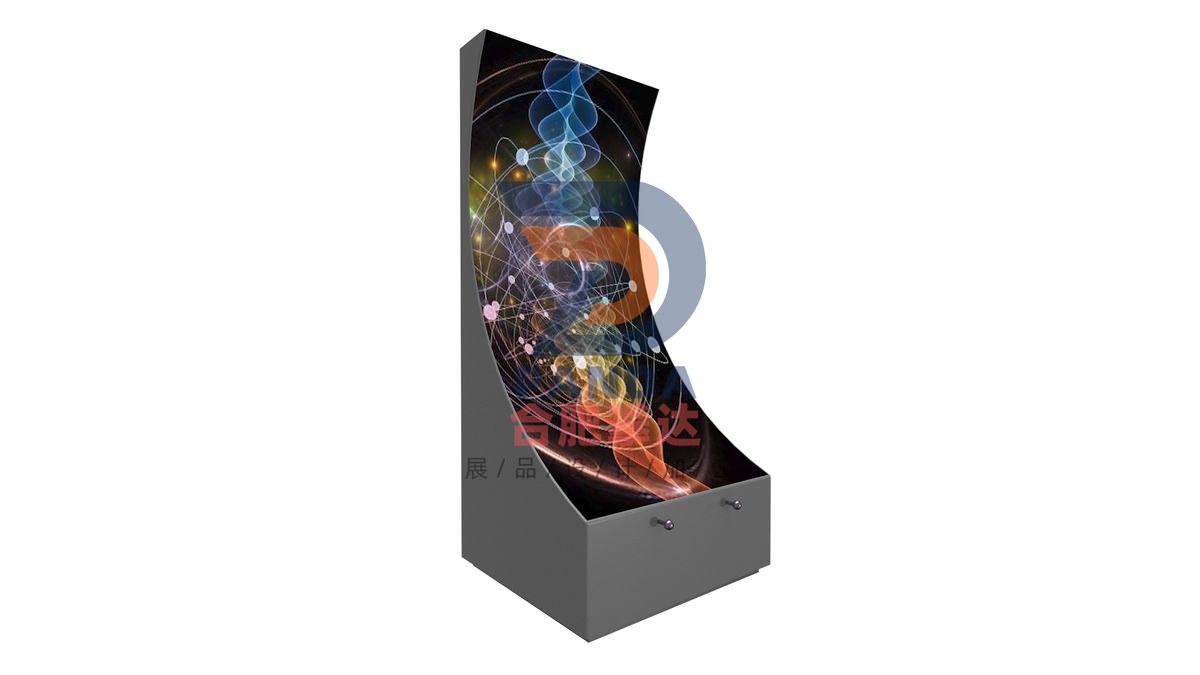
Photo Pinball Machine
Quantum Technology · Interactive
- DimensionsSubject to on-site plan
- PresentationInteractive
- PricingQuoted by manufacture spec
Photo Pinball Machine is a hands-on, mechanical & electromechanical interactive exhibit manufactured by Hefei Panda for science centers, children’s museums, discovery centers, STEM learning centers and family entertainment centers. Engineered for durable, robust, low-maintenance, high-traffic gallery installation, it turns abstract scientific concepts into direct, interactive visitor exploration. Hefei Panda is a global exhibit manufacturer exporting hands-on science displays to 50+ countries, with in-house engineering, fabrication, installation and commissioning.
Exhibit Summary
Photo Pinball Machine is a Interactive interactive exhibit in the Quantum Technology category, designed for science centers, children’s museums, discovery centers, STEM learning centers and family entertainment centers. Built as a hands-on, mechanical & electromechanical display, it turns an abstract scientific concept into direct, interactive visitor exploration, and is engineered for durable, low-maintenance, high-traffic gallery use.
Scientific Principle
The exhibition allows the audience to intuitively grasp that photons are also particles via the form of games, simulating the phenomenon of American physicist Compton’s X-ray experiment. This experiment confirmed the particle nature of light and proved the correctness of quantum theory.
Operation
The design of this exhibition is similar to a pinball machine, consisting of a projector, projection surface, pull rod unit, etc. The audience turns the lever to align it with the electrons set on the projection screen, pulls and releases, emitting colored photons, which are simulated by the screen. If a photon hits an electron set on the projection screen, the scattering effect after the collision between the photon and the electron will be displayed. The color of the photon changes and the direction of movement changes. The wavelength of the photon changes after the simulated collision. The changes in wavelength and direction of movement indicate that the photon also has momentum, thus indirectly proving that the photon has particle nature. From 1922 to 1923, Compton studied the components of light after X-rays were scattered by lighter substances (graphite, paraffin, etc.) and found that in addition to components with the same wavelength as the original wavelength, the scattered spectral lines also had components with longer wavelengths. This scattering phenomenon, called Compton scattering or the Compton effect, is another important experiment that demonstrates the particle nature of light. This exhibition uses multimedia hands-on simulation of the Compton scattering process to show the interaction between photons and electrons.
Export-Ready Features
- Durable, robust construction for high-traffic gallery environments
- Low-maintenance electromechanical design with reliable, safe components
- Custom sizing, theming & multilingual labeling available
- OEM & turnkey exhibit solutions with full project management
- Overseas shipping, export documentation & on-site installation supported
- Shipped to science centers and museums in 50+ countries