
Contribution of random numbers
Quantum Technology · Interactive
- DimensionsSubject to on-site plan
- PresentationInteractive
- PricingQuoted by manufacture spec
Contribution of random numbers is a hands-on, mechanical & electromechanical interactive exhibit manufactured by Hefei Panda for science centers, children’s museums, discovery centers, STEM learning centers and family entertainment centers. Engineered for durable, robust, low-maintenance, high-traffic gallery installation, it turns abstract scientific concepts into direct, interactive visitor exploration. Hefei Panda is a global exhibit manufacturer exporting hands-on science displays to 50+ countries, with in-house engineering, fabrication, installation and commissioning.
Exhibit Summary
Contribution of random numbers is a Interactive interactive exhibit in the Quantum Technology category, designed for science centers, children’s museums, discovery centers, STEM learning centers and family entertainment centers. Built as a hands-on, mechanical & electromechanical display, it turns an abstract scientific concept into direct, interactive visitor exploration, and is engineered for durable, low-maintenance, high-traffic gallery use.
Scientific Principle
Through multimedia interaction, the exhibition allows the audience to participate in quantum science experiments without knowing it, contribute to science research, and grasp the cutting-edge results of Anhui's quantum research.
Operation
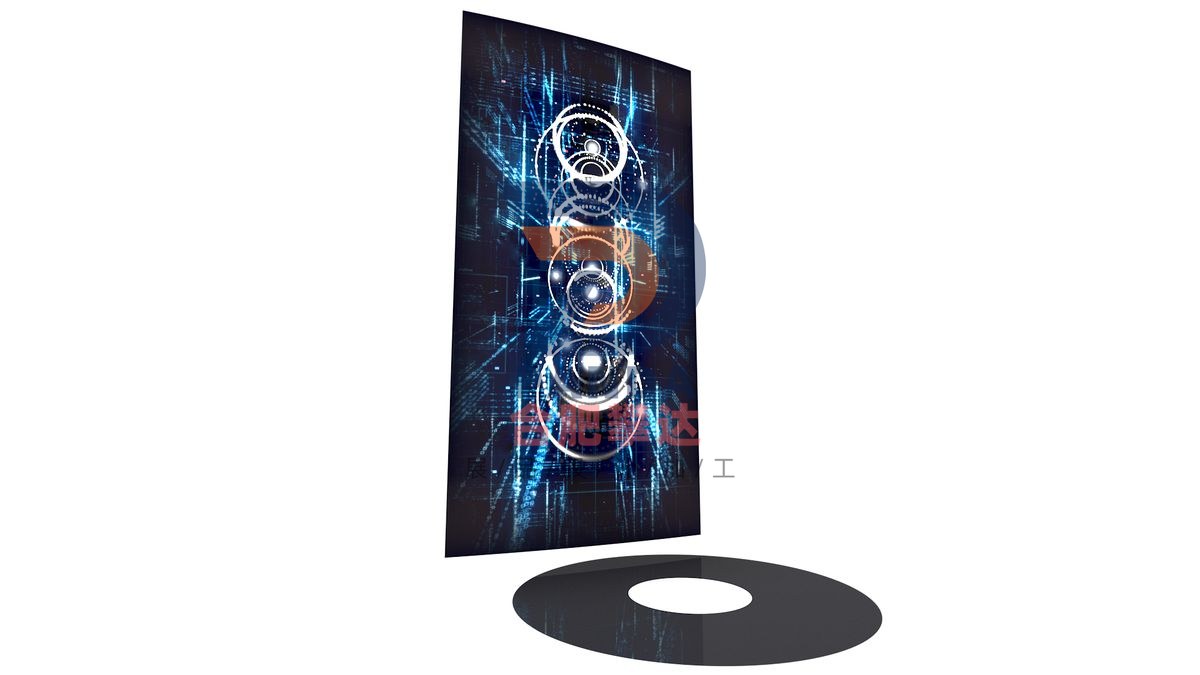
When the audience is not close, the debate between Einstein and Bohr on entangled states and the situation of Bell's experiment are revealed on the screen. As the viewer approaches, the projection will randomly project many points on the glass, allowing the viewer to choose at random. After triggering the selection, the exhibition items can generate random numbers, and the data is transmitted to the USTC laboratory for recording in real time. The audience will then receive proof of successful participation in the experiment, and the screen will display the XXth audience member participating in the experiment. When the system accumulates enough data, the laboratory can begin to verify whether Bell's inequality holds, and regularly feed back the results to the Science and Technology Museum for display. Bell's inequality is a powerful mathematical inequality proposed by Bell in 1964. This theorem establishes a strict limit on the possible correlation of the results when two separate particles are measured simultaneously, under the dual assumptions of locality and reality. The 2022 Nobel Prize in Physics will be awarded to French physicist Alain Aspect, American theoretical and experimental physicist John F. Clauser, and Austrian physicist Anton Zeilinger in recognition of their contributions to quantum information science research. Through photon entanglement experiments, they determined that Bell's inequality does not hold in the quantum world, proved the completeness of quantum mechanics, and created the subject of quantum information.
Export-Ready Features
- Durable, robust construction for high-traffic gallery environments
- Low-maintenance electromechanical design with reliable, safe components
- Custom sizing, theming & multilingual labeling available
- OEM & turnkey exhibit solutions with full project management
- Overseas shipping, export documentation & on-site installation supported
- Shipped to science centers and museums in 50+ countries