
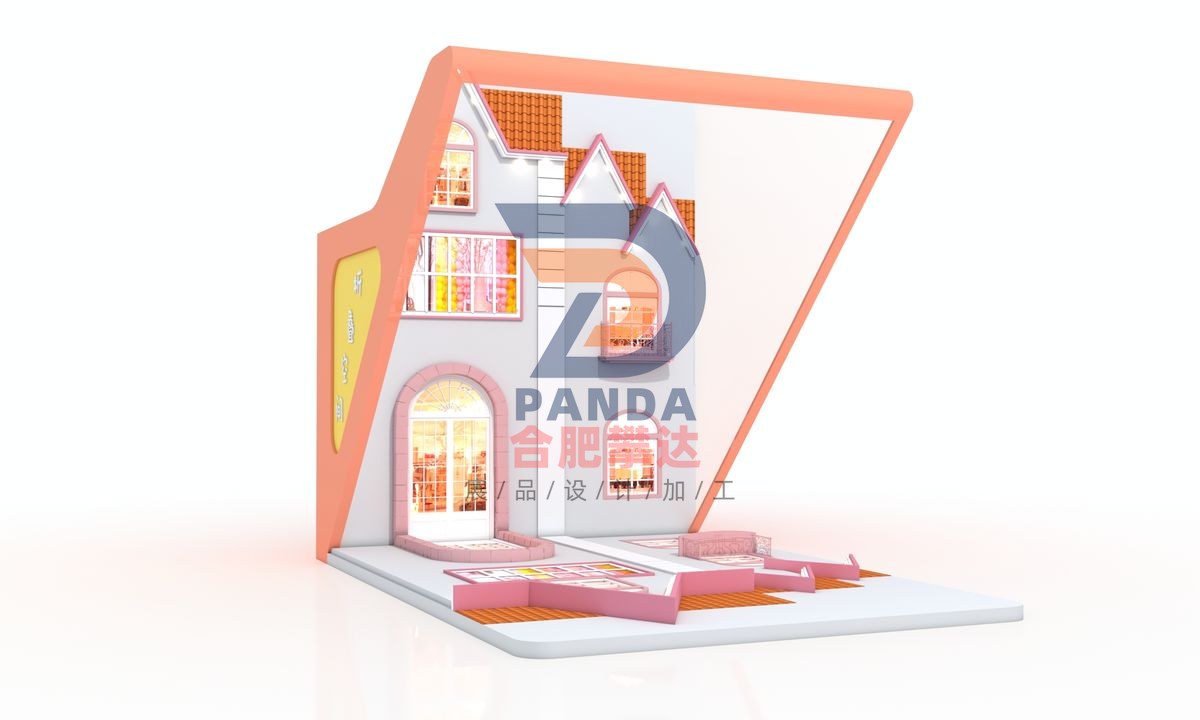
Folding Space
Kids' Zone · Interactive
- DimensionsSubject to on-site plan
- PresentationInteractive
- PricingQuoted by manufacture spec
Folding Space is a hands-on, mechanical & electromechanical interactive exhibit manufactured by Hefei Panda for science centers, children’s museums, discovery centers, STEM learning centers and family entertainment centers. Engineered for durable, robust, low-maintenance, high-traffic gallery installation, it turns abstract scientific concepts into direct, interactive visitor exploration. Hefei Panda is a global exhibit manufacturer exporting hands-on science displays to 50+ countries, with in-house engineering, fabrication, installation and commissioning.
Exhibit Summary
Folding Space is a Interactive interactive exhibit in the Kids' Zone category, designed for science centers, children’s museums, discovery centers, STEM learning centers and family entertainment centers. Built as a hands-on, mechanical & electromechanical display, it turns an abstract scientific concept into direct, interactive visitor exploration, and is engineered for durable, low-maintenance, high-traffic gallery use.
Scientific Principle
View the world from a different perspective, grasp the material of the mirror and the characteristics of the mirror's imaging, grasp the concept of mirror reflection, feel the fantasy world presented by the mirror, and become a parent-child hands-on internet celebrity check-in point.
Operation
The display is equipped with a large flat mirror placed at an angle, with the mirror surface at 45° to the ground. A wall cutout is installed on the ground. The audience can view the reflected vertical wall from the mirror. Children lying on the cutout look like they are climbing on the wall from the mirror. The light from the sun or lamp shines on a person and is reflected onto the mirror (this is diffuse reflection). The plane mirror reflects the light into the human eye, so we view a virtual image of ourselves in the plane mirror. (This is the reflection of light by a plane mirror). The image in a plane mirror is formed by the intersection of the extended lines of reflected light, so the image in a plane mirror is a virtual image. The virtual image is the same size and distance from the object. The size of the image and the object are equal. So the image and object are symmetrical to the mirror. This is how looking in the mirror works. It can be said that as long as a plane mirror is used, it must be reflection.
Export-Ready Features
- Durable, robust construction for high-traffic gallery environments
- Low-maintenance electromechanical design with reliable, safe components
- Custom sizing, theming & multilingual labeling available
- OEM & turnkey exhibit solutions with full project management
- Overseas shipping, export documentation & on-site installation supported
- Shipped to science centers and museums in 50+ countries