
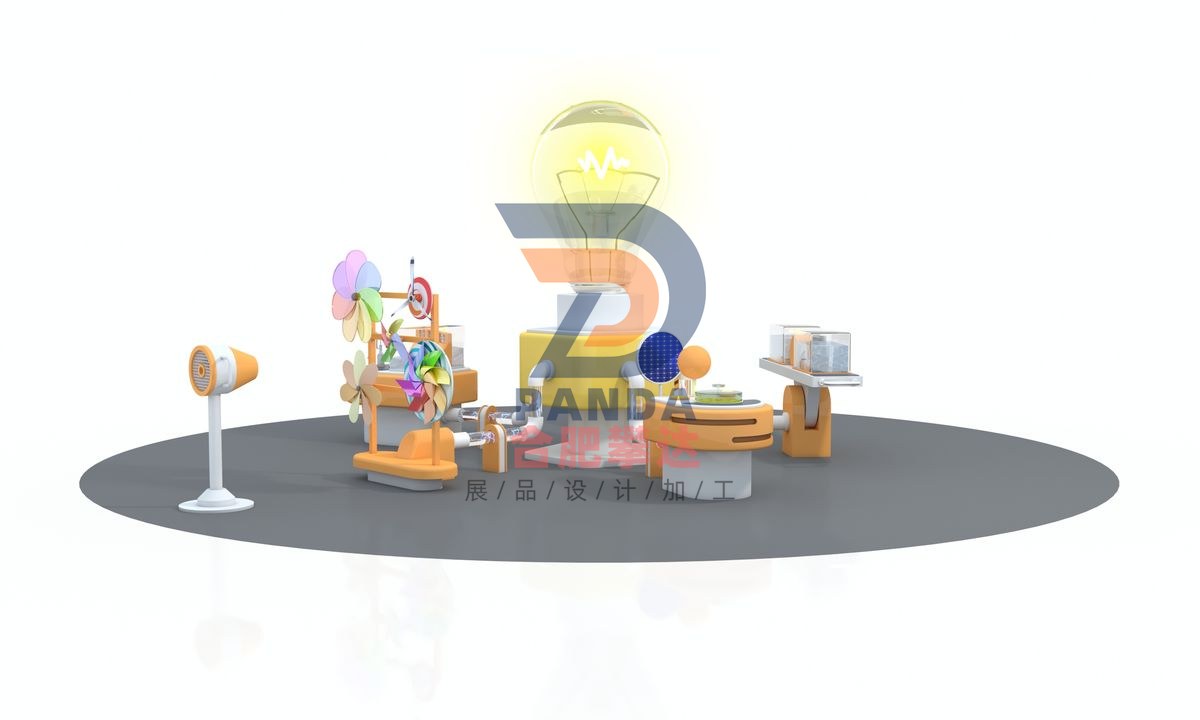
City Source Power
Kids' Zone · Interactive
- DimensionsSubject to on-site plan
- PresentationInteractive
- PricingQuoted by manufacture spec
City Source Power is a hands-on, mechanical & electromechanical interactive exhibit manufactured by Hefei Panda for science centers, children’s museums, discovery centers, STEM learning centers and family entertainment centers. Engineered for durable, robust, low-maintenance, high-traffic gallery installation, it turns abstract scientific concepts into direct, interactive visitor exploration. Hefei Panda is a global exhibit manufacturer exporting hands-on science displays to 50+ countries, with in-house engineering, fabrication, installation and commissioning.
Exhibit Summary
City Source Power is a Interactive interactive exhibit in the Kids' Zone category, designed for science centers, children’s museums, discovery centers, STEM learning centers and family entertainment centers. Built as a hands-on, mechanical & electromechanical display, it turns an abstract scientific concept into direct, interactive visitor exploration, and is engineered for durable, low-maintenance, high-traffic gallery use.
Scientific Principle
Through simple interactions, the displays allow children to simply grasp how electricity is generated and how electricity is generated in our daily lives.
Operation
The displays mainly consist of light bulb models, wind power generation devices, thermal power generation devices, hydropower generation devices, solar power generation devices and tidal power generation devices. Wind power generation unit: consists of a windmill and a wind collecting cover. Children blow into the windmill to simulate natural wind blowing the wind power generation unit to generate electricity. Thermal power generation unit: simulated by a hand-operated light box. Children pull the handle and the light box turns on and off. Hydropower generation unit: It is simulated by a water tank, a dam, and a pressure pump. Children press the handle of the pump to raise the water level on one side of the water tank, and the water flows via the generator set to simulate hydropower generation. Solar power generation unit: It consists of a downlight and a solar panel. Children rotate the hour hand. When it is daytime, the downlight lights up and illuminates the solar panel, simulating the sun's irradiation of the solar panel to generate electricity. Tidal power generation unit: It consists of a water tank, a runner, a water pump, etc. The water tank is set up as an upper and lower layer. Turning the handwheel triggers the water pump to replenish the upper water tank. The water flows via the drainage groove to the lower water tank of the platform, thereby forming circulating water, simulating tides, impacting the generator impeller, and driving the generator to generate electricity. 90% of China's electricity comes from thermal power and hydropower. In my country's power supply structure, thermal power, hydropower, nuclear power, and new energy each account for the proportion of the power industry: thermal power accounts for 72.4%, hydropower accounts for 24.5%, nuclear power accounts for 2.4%, and new energy accounts for 0.7%. Thermal power generation is the main power generation method in my country. As one of the three major host equipment of thermal power plants, power station boilers have developed along with the development of my country's thermal power industry.
Export-Ready Features
- Durable, robust construction for high-traffic gallery environments
- Low-maintenance electromechanical design with reliable, safe components
- Custom sizing, theming & multilingual labeling available
- OEM & turnkey exhibit solutions with full project management
- Overseas shipping, export documentation & on-site installation supported
- Shipped to science centers and museums in 50+ countries