
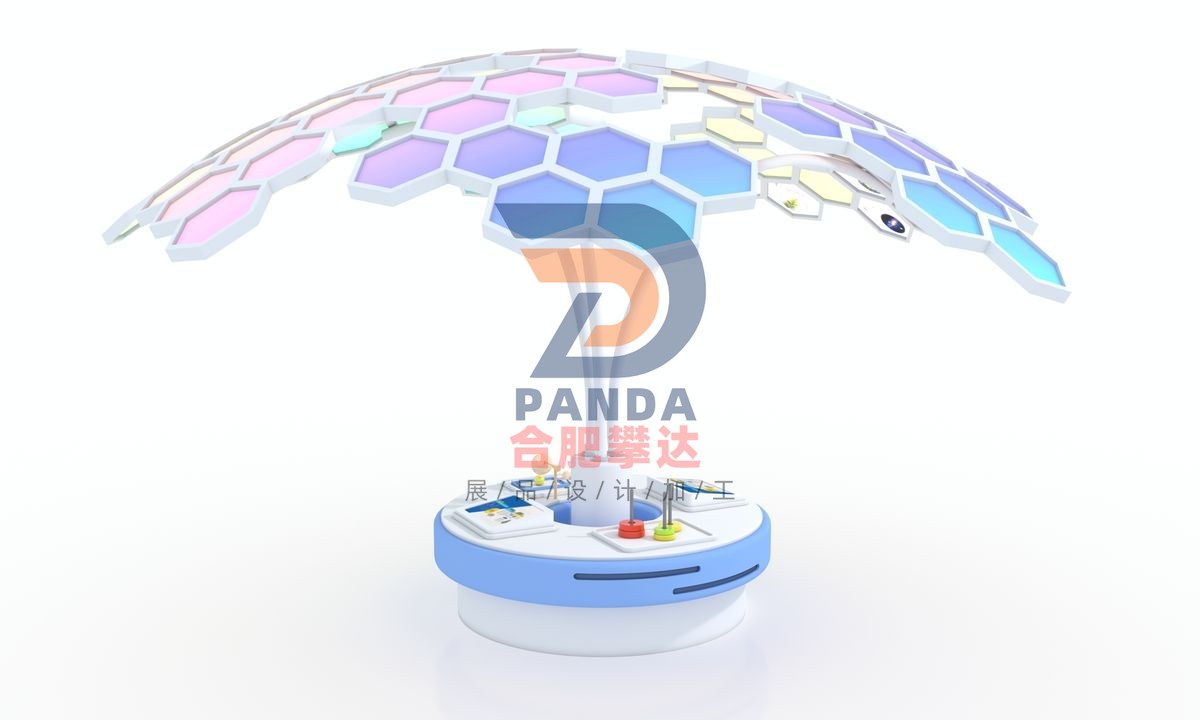
Who is smarter
Kids' Zone · Interactive
- DimensionsSubject to on-site plan
- PresentationInteractive
- PricingQuoted by manufacture spec
Who is smarter is a hands-on, mechanical & electromechanical interactive exhibit manufactured by Hefei Panda for science centers, children’s museums, discovery centers, STEM learning centers and family entertainment centers. Engineered for durable, robust, low-maintenance, high-traffic gallery installation, it turns abstract scientific concepts into direct, interactive visitor exploration. Hefei Panda is a global exhibit manufacturer exporting hands-on science displays to 50+ countries, with in-house engineering, fabrication, installation and commissioning.
Exhibit Summary
Who is smarter is a Interactive interactive exhibit in the Kids' Zone category, designed for science centers, children’s museums, discovery centers, STEM learning centers and family entertainment centers. Built as a hands-on, mechanical & electromechanical display, it turns an abstract scientific concept into direct, interactive visitor exploration, and is engineered for durable, low-maintenance, high-traffic gallery use.
Scientific Principle
The exhibition uses hands-on games to train children's logical thinking ability, allowing them to grasp the importance of discovering and utilizing rules.
Operation
The displays are composed of four mini-games: Graphic Classification, Brahma Tower Game, Werewolf, Sheep and Vegetable Crossing the River, and Someone Wants to Cross the Bridge. The difficulty of the games gradually increases. Transform common hands-on games in life into hands-on displays, and the audience will gradually develop their intelligence during the participation process. Graphic classification: According to the voice prompts, select the module and place it in the sensing area to view if it is correct. Brahma Pagoda: Rearrange the disks in order of size from the bottom on another pillar. You cannot enlarge the disc on the small disc, and you can only move one disc at a time between the three pillars. The problem of humans, wolves, and vegetables crossing the river: grasp the rules of the game, choose vegetables, wolves, and sheep to cross the river, and complete the intellectual game. There is a person who wants to cross a bridge: set up a bridge crossing game, click the "Start Game" button to enter the game; select a game level and follow the on-screen prompts to complete the level. Things and phenomena in the world vary widely, and they all have their own different laws. In terms of their fundamental content, they can be divided into natural laws, social laws and thinking laws. Natural laws and social laws are both laws of the objective material world, and their forms of expression are different: natural laws are expressed in various unconscious and blind dynamic interactions in nature; social laws must be expressed via people's conscious activities. The law of thinking is the reflection of human subjective thinking form on the objective law of the material world.
Export-Ready Features
- Durable, robust construction for high-traffic gallery environments
- Low-maintenance electromechanical design with reliable, safe components
- Custom sizing, theming & multilingual labeling available
- OEM & turnkey exhibit solutions with full project management
- Overseas shipping, export documentation & on-site installation supported
- Shipped to science centers and museums in 50+ countries