
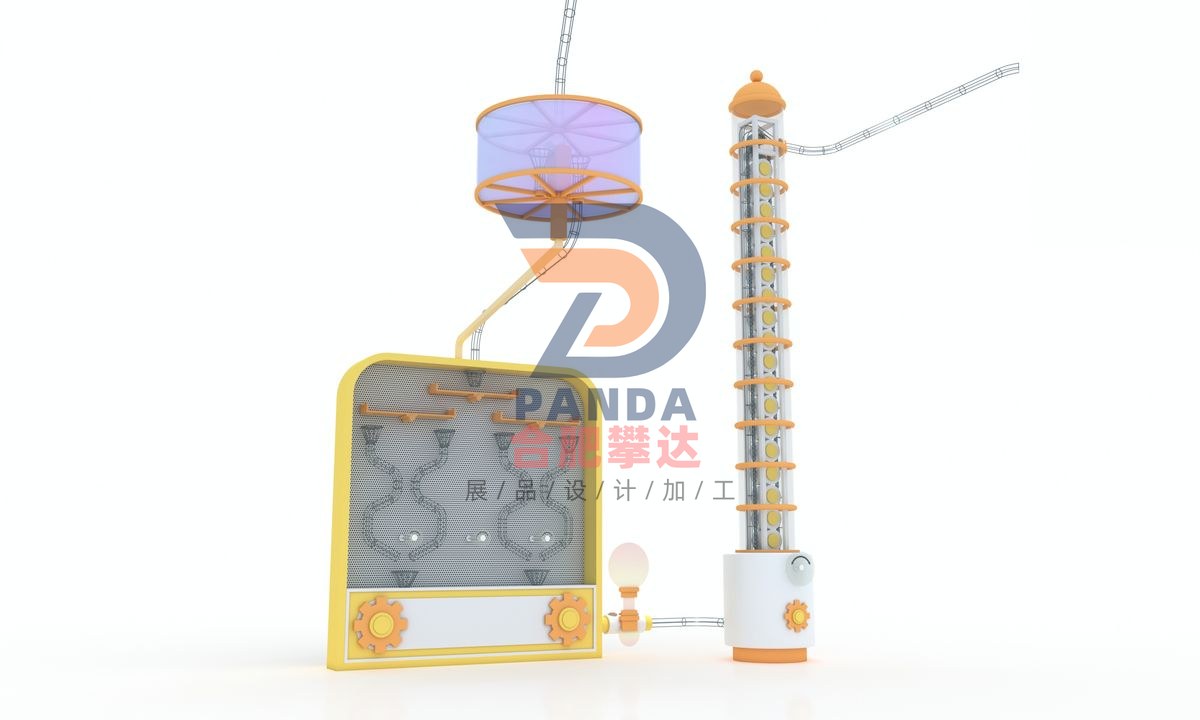
How does water get to my home - water distribution slide
Kids' Zone · Interactive
- DimensionsSubject to on-site plan
- PresentationInteractive
- PricingQuoted by manufacture spec
How does water get to my home - water distribution slide is a hands-on, mechanical & electromechanical interactive exhibit manufactured by Hefei Panda for science centers, children’s museums, discovery centers, STEM learning centers and family entertainment centers. Engineered for durable, robust, low-maintenance, high-traffic gallery installation, it turns abstract scientific concepts into direct, interactive visitor exploration. Hefei Panda is a global exhibit manufacturer exporting hands-on science displays to 50+ countries, with in-house engineering, fabrication, installation and commissioning.
Exhibit Summary
How does water get to my home - water distribution slide is a Interactive interactive exhibit in the Kids' Zone category, designed for science centers, children’s museums, discovery centers, STEM learning centers and family entertainment centers. Built as a hands-on, mechanical & electromechanical display, it turns an abstract scientific concept into direct, interactive visitor exploration, and is engineered for durable, low-maintenance, high-traffic gallery use.
Scientific Principle
The exhibition group uses the story of domestic water extraction, purification and then transportation to our homes as the background of the story. The movement route of the small ball represents the transportation route of water. The use of mechanical interaction allows children to cultivate their attention, exercise their reflexes, and enhance their understanding of shape characteristics, mechanical movement, and potential energy conversion. Discover how water pumped from the ground or rivers is purified to meet the standards for our daily use.
Operation
The small balls from the previous link enter the open funnel. A ball dividing unit is set up under the funnel, and then enter the "Water Tower Obstacle House" and "Water Distribution Slide" in sequence. After the small ball enters the exhibition item, the audience turns the hand wheel to control the small ball to enter the ball collecting trough below via different paths. An inclined track is set up in the ball collecting trough, and the small ball enters the chain lifting unit. The audience turns the handwheel, and the ball is lifted via the chain to the top and enters the next stage. The exhibition items are set in two modes: manual and automatic. Within a certain period of time, when no one is participating, they will run automatically to ensure that the exhibition group runs in an orderly manner and does not get stuck. Tap water is transported from unpolluted rivers and reservoirs to water plants. After it is disinfected by the water plant and reaches drinking water standards, it is then transported to residential water pipes for daily water use by residents. The exhibition group uses the story background of domestic water extraction, purification and then transportation to our homes. The movement route of the ball represents the transportation route of water. The use of mechanical interaction allows children to cultivate their attention, exercise their reflexes, and enhance their understanding of shape characteristics, mechanical movement, and potential energy conversion. Discover how water pumped from the ground or rivers is purified to meet the standards for our daily use.
Export-Ready Features
- Durable, robust construction for high-traffic gallery environments
- Low-maintenance electromechanical design with reliable, safe components
- Custom sizing, theming & multilingual labeling available
- OEM & turnkey exhibit solutions with full project management
- Overseas shipping, export documentation & on-site installation supported
- Shipped to science centers and museums in 50+ countries