
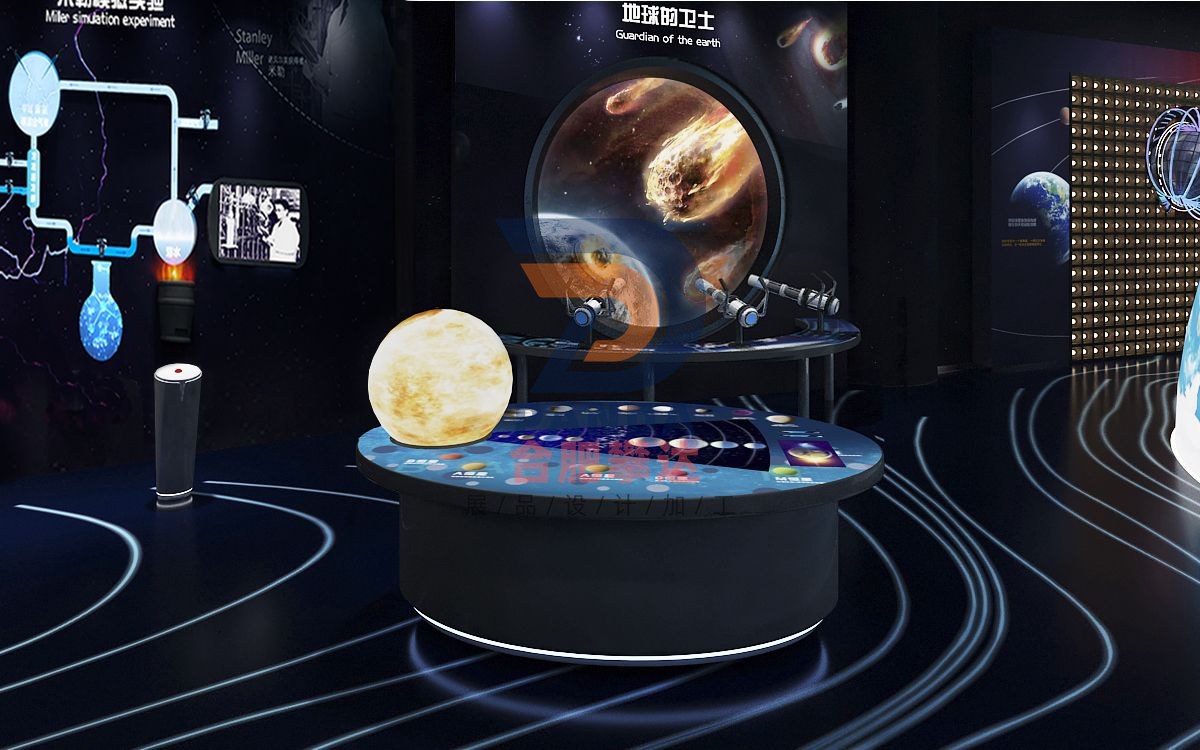
Searching for the habitable zone
Aerospace · Interactive
- DimensionsSubject to on-site plan
- PresentationInteractive
- PricingQuoted by manufacture spec
Searching for the habitable zone is a hands-on, mechanical & electromechanical interactive exhibit manufactured by Hefei Panda for science centers, children’s museums, discovery centers, STEM learning centers and family entertainment centers. Engineered for durable, robust, low-maintenance, high-traffic gallery installation, it turns abstract scientific concepts into direct, interactive visitor exploration. Hefei Panda is a global exhibit manufacturer exporting hands-on science displays to 50+ countries, with in-house engineering, fabrication, installation and commissioning.
Exhibit Summary
Searching for the habitable zone is a Interactive interactive exhibit in the Aerospace category, designed for science centers, children’s museums, discovery centers, STEM learning centers and family entertainment centers. Built as a hands-on, mechanical & electromechanical display, it turns an abstract scientific concept into direct, interactive visitor exploration, and is engineered for durable, low-maintenance, high-traffic gallery use.
Scientific Principle
Through star models and light sensing modules, this display allows the audience to grasp the important factors that determine the range of the habitable zone in the planetary system via hands-on operations, feel the impact of changes in different factors on the habitable zone and planets, compare the characteristics of different planetary systems, grasp some representative habitable zone planets in the universe that we currently know, and feel the importance of humans actively searching for the habitable zone and habitable planets.
Operation
The "habitable zone" actually refers to a certain distance range around a star within which water can exist in liquid form. Since liquid water is considered by scientists to be an indispensable element for the survival of life, if a planet happens to fall within this range, then it is considered to have a greater chance of having life or at least an environment in which life can survive. The extent of the habitable zone should be defined by low temperatures on the outer edge and high temperatures on the inner edge. Take the sun as an example. If the distance to the sun is close, there will be no liquid ocean on the surface of the planet, like Venus; if it is too far away, it will be frozen again. If the earth is moved outward some distance, or the solar radiation is weakened, the surface temperature of the earth will decrease until it is covered with ice and snow. The display "Searching for the Habitable Zone" focuses on the various factors that determine the range of the habitable zone in a planetary system. It uses a star model tabletop combined with a light sensor module to more realistically and vividly popularize relevant science principles via hands-on operations, demonstrating the importance of mankind's search for the habitable zone.
Export-Ready Features
- Durable, robust construction for high-traffic gallery environments
- Low-maintenance electromechanical design with reliable, safe components
- Custom sizing, theming & multilingual labeling available
- OEM & turnkey exhibit solutions with full project management
- Overseas shipping, export documentation & on-site installation supported
- Shipped to science centers and museums in 50+ countries