
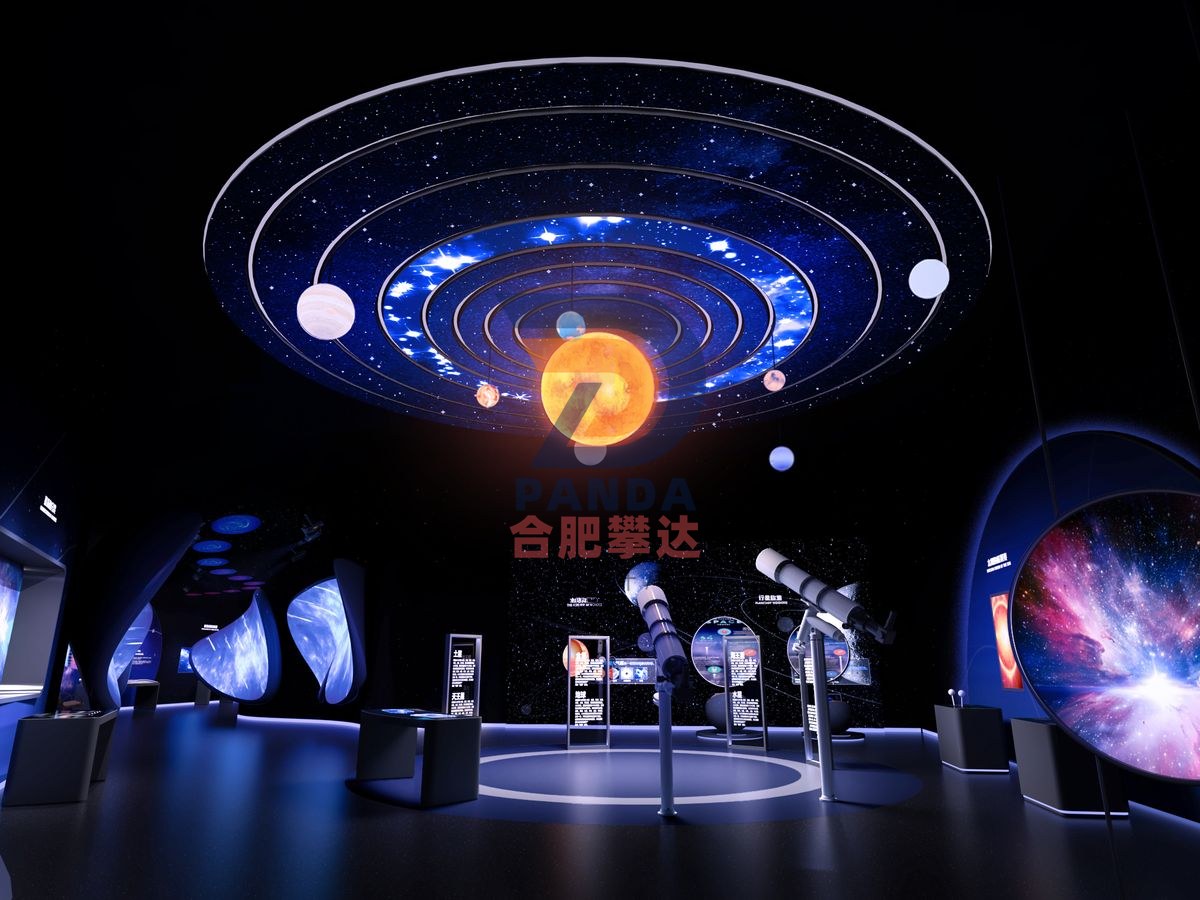
The Formation of the Sun and the Solar System
Aerospace · Interactive
- DimensionsSubject to on-site plan
- PresentationInteractive
- PricingQuoted by manufacture spec
The Formation of the Sun and the Solar System is a hands-on, mechanical & electromechanical interactive exhibit manufactured by Hefei Panda for science centers, children’s museums, discovery centers, STEM learning centers and family entertainment centers. Engineered for durable, robust, low-maintenance, high-traffic gallery installation, it turns abstract scientific concepts into direct, interactive visitor exploration. Hefei Panda is a global exhibit manufacturer exporting hands-on science displays to 50+ countries, with in-house engineering, fabrication, installation and commissioning.
Exhibit Summary
The Formation of the Sun and the Solar System is a Interactive interactive exhibit in the Aerospace category, designed for science centers, children’s museums, discovery centers, STEM learning centers and family entertainment centers. Built as a hands-on, mechanical & electromechanical display, it turns an abstract scientific concept into direct, interactive visitor exploration, and is engineered for durable, low-maintenance, high-traffic gallery use.
Scientific Principle
The displays are linked with the displays "02-09 Eight Planets" and "02-10 Asteroid Belt" to create a micro theater to regularly interpret the birth and operation of the sun and the solar system, allowing the audience to grasp the formation process of the sun and the solar system.
Operation
(1) The formation and evolution of the solar system began with the gravitational collapse of a small piece of a giant molecular cloud 4.6 billion years ago. Most of the collapsed mass was concentrated in the center, forming the Sun, and the remainder flattened out to form a protoplanetary disk, which in rotate formed planets, moons, meteorites, and other small solar system systems. (2) Composition of the solar system: The most important member of the solar system is the sun, which accounts for 99.86% of the known mass of the solar system. The celestial bodies in the solar system move under the constraints of the sun's gravity. Of the remaining mass, 99% is composed of the four large objects in the solar system, the giant planets, and Jupiter and Saturn together account for more than 90% of it. The total mass of the remaining celestial bodies in the solar system (including 4 terrestrial planets, dwarf planets, satellites, asteroids and comets) is less than 0.002% of the solar system. The large celestial bodies orbiting the Sun lie on a plane near the Earth's orbital plane - the ecliptic. The planets are very close to the ecliptic, and Kuiper Belt objects usually have significant tilts. All planets and most other objects in the solar system orbit the sun in the same direction. The displays focus on the birth process of the sun and the formation of the solar system.
Export-Ready Features
- Durable, robust construction for high-traffic gallery environments
- Low-maintenance electromechanical design with reliable, safe components
- Custom sizing, theming & multilingual labeling available
- OEM & turnkey exhibit solutions with full project management
- Overseas shipping, export documentation & on-site installation supported
- Shipped to science centers and museums in 50+ countries