
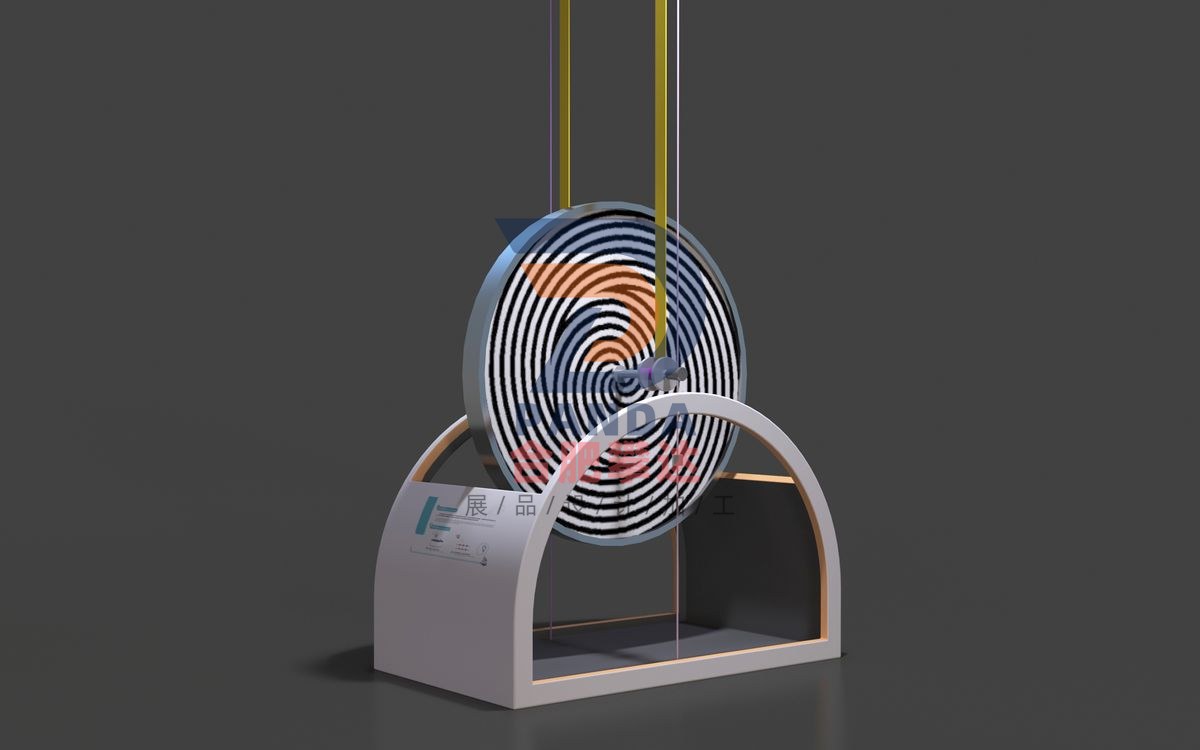
Up or Down
Mechanics in Motion · Interactive
- DimensionsSubject to on-site plan
- PresentationInteractive
- PricingQuoted by manufacture spec
Up or Down is a hands-on, mechanical & electromechanical interactive exhibit manufactured by Hefei Panda for science centers, children’s museums, discovery centers, STEM learning centers and family entertainment centers. Engineered for durable, robust, low-maintenance, high-traffic gallery installation, it turns abstract scientific concepts into direct, interactive visitor exploration. Hefei Panda is a global exhibit manufacturer exporting hands-on science displays to 50+ countries, with in-house engineering, fabrication, installation and commissioning.
Exhibit Summary
Up or Down is a Interactive interactive exhibit in the Mechanics in Motion category, designed for science centers, children’s museums, discovery centers, STEM learning centers and family entertainment centers. Built as a hands-on, mechanical & electromechanical display, it turns an abstract scientific concept into direct, interactive visitor exploration, and is engineered for durable, low-maintenance, high-traffic gallery use.
Scientific Principle
The exhibition aims to vividly show via hands-on devices the concept that the total amount of mechanical energy remains unchanged during the mutual conversion of gravitational potential energy and kinetic energy.
Operation
When the shaft of the roller is twisted and the roller rises to the top, a certain amount of potential energy is stored. When the roller is released and begins to rotate downward, the potential energy of the roller gradually decreases, while the kinetic energy (translational kinetic energy and rotational kinetic energy) gradually increases. When the suspension line is completely released and the roller no longer descends, the rotational angular speed and descending translation speed reach the maximum value, and the kinetic energy is maximum. As the roller continues to rotate, it begins to wrap around the suspension line again, causing the roller to rise. As the roller rises, the kinetic energy gradually decreases, but the potential energy gradually increases. When it rises to a height similar to the original, the kinetic energy is zero and the potential energy is maximum. If there is no resistance, the roller will rise to the same height each time, indicating that the total amount of mechanical energy remains unchanged during the mutual conversion process of the roller's potential energy and kinetic energy. When the Maxwell roller descends, the lower the height, the smaller the gravitational potential energy, the greater the rotation speed, and the greater the rotational kinetic energy; when the roller rises, the higher the height, the greater the gravitational potential energy, the smaller the rotation speed, and the smaller the rotational kinetic energy. The process of an object doing work is energy conversion, which refers to the mutual conversion process between various energies under certain conditions. Objects at high places have a certain potential energy. When the object falls, the potential energy is converted into kinetic energy. The runner rebounds and rises under the action of the rope, and the kinetic energy is converted into potential energy. Finally, under the action of friction, the energy is exhausted and reaches a stationary state.
Export-Ready Features
- Durable, robust construction for high-traffic gallery environments
- Low-maintenance electromechanical design with reliable, safe components
- Custom sizing, theming & multilingual labeling available
- OEM & turnkey exhibit solutions with full project management
- Overseas shipping, export documentation & on-site installation supported
- Shipped to science centers and museums in 50+ countries