
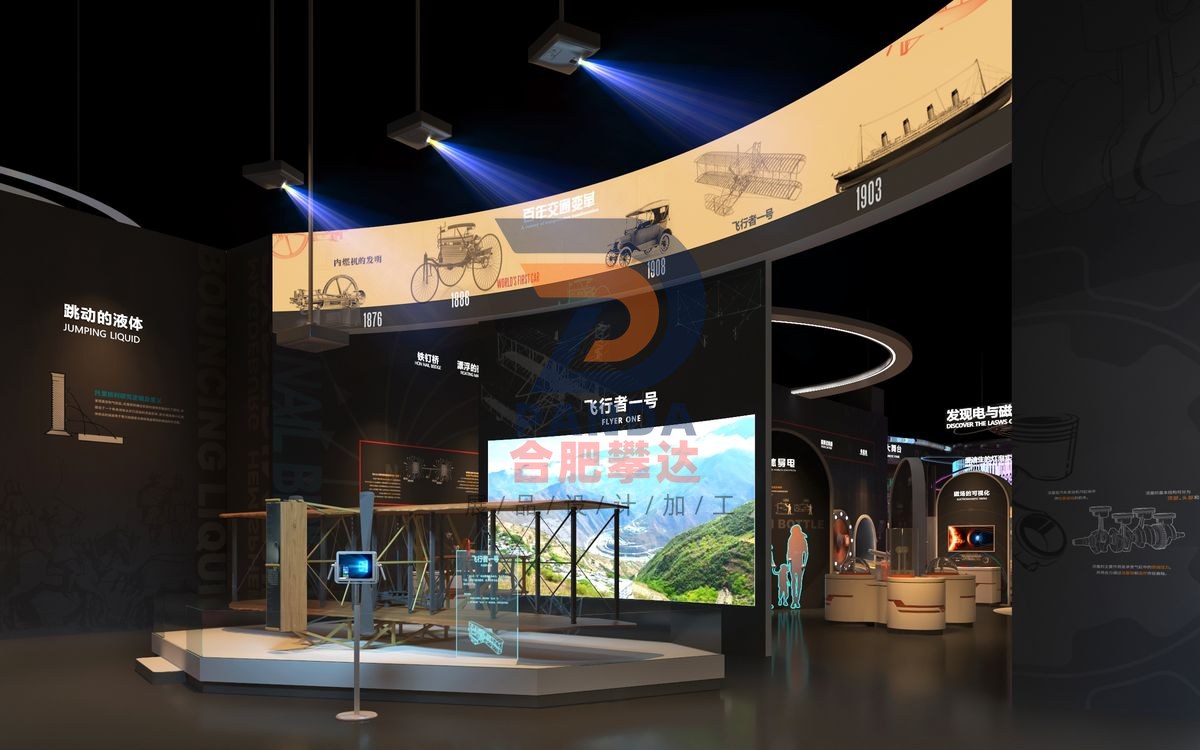
A Century of Transportation Change
Smart Technology · Interactive
- DimensionsSubject to on-site plan
- PresentationInteractive
- PricingQuoted by manufacture spec
A Century of Transportation Change is a hands-on, mechanical & electromechanical interactive exhibit manufactured by Hefei Panda for science centers, children’s museums, discovery centers, STEM learning centers and family entertainment centers. Engineered for durable, robust, low-maintenance, high-traffic gallery installation, it turns abstract scientific concepts into direct, interactive visitor exploration. Hefei Panda is a global exhibit manufacturer exporting hands-on science displays to 50+ countries, with in-house engineering, fabrication, installation and commissioning.
Exhibit Summary
A Century of Transportation Change is a Interactive interactive exhibit in the Smart Technology category, designed for science centers, children’s museums, discovery centers, STEM learning centers and family entertainment centers. Built as a hands-on, mechanical & electromechanical display, it turns an abstract scientific concept into direct, interactive visitor exploration, and is engineered for durable, low-maintenance, high-traffic gallery use.
Scientific Principle
1. Let the audience grasp the rapid development of transportation in the 20th century. 2. Feel the impact and changes brought by the rapid development of transportation to society.
Operation
1. The invention and evolution of human transportation after the second industrial revolution; 2. The social impact brought about by the development of transportation in the 20th century. The invention of the internal combustion engine was a major achievement in the field of applied technology in the second industrial revolution. While people use internal combustion engines to drive trains and ships, they also use internal combustion engines as power to successfully develop new means of transportation, cars and airplanes. The transportation industry around the world has developed rapidly, and the total length of the world's railways has doubled. Humanity has rapidly entered the era of water, land and air three-dimensional transportation from the era of plane transportation. The development of internal combustion vehicles In 1908, Henry Ford and his five-year-old company launched the classic car that brought the automobile industry into mass production: the Model T. Development of internal combustion steamships The wide application of internal combustion engines has promoted the development of petroleum, and internal combustion engines with diesel as the fuel source have been used in ship propulsion. By the 1950s, diesel engines had almost completely replaced steam engines in newly built ships. The invention and development of airplanes "Aviator One" is powered by an internal combustion engine. The engine has four cylinders and uses gasoline as fuel. The maximum power can reach 12 kilowatts, but it weighs only 75 kilograms. At the time, the maximum power this engine could produce per unit weight exceeded that of any other internal combustion engine used in automobiles. The development of internal combustion vehicles In 1908, Henry Ford and his five-year-old company launched the classic car that brought the automobile industry into mass production: the Model T. Development of internal combustion steamships The wide application of internal combustion engines has promoted the development of petroleum, and internal combustion engines with diesel as the fuel source have been used in ship propulsion. By the 1950s, diesel engines had almost completely replaced steam engines in newly built ships. The invention and development of airplanes "Aviator One" is powered by an internal combustion engine. The engine has four cylinders and uses gasoline as fuel. The maximum power can reach 12 kilowatts, but it weighs only 75 kilograms. At the time, the maximum power this engine could produce per unit weight exceeded that of any other internal combustion engine used in automobiles.
Export-Ready Features
- Durable, robust construction for high-traffic gallery environments
- Low-maintenance electromechanical design with reliable, safe components
- Custom sizing, theming & multilingual labeling available
- OEM & turnkey exhibit solutions with full project management
- Overseas shipping, export documentation & on-site installation supported
- Shipped to science centers and museums in 50+ countries