
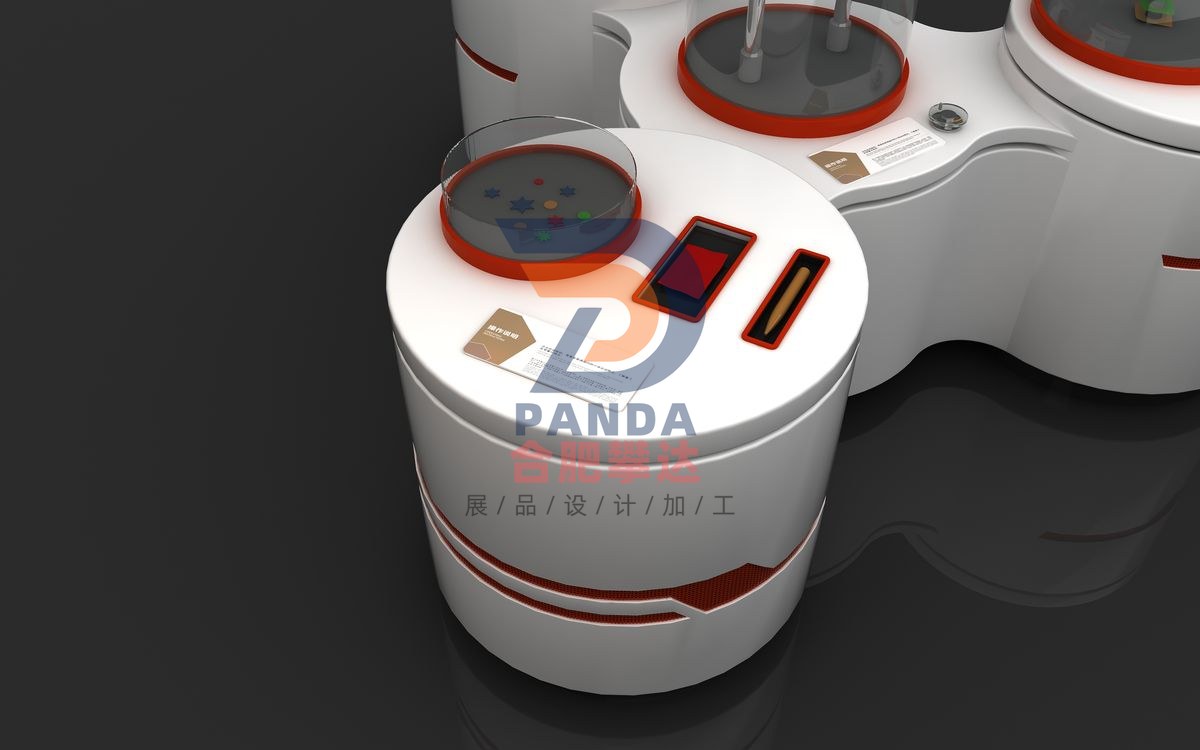
Static electricity combination - triboelectricity
Electromagnetism · Interactive
- DimensionsSubject to on-site plan
- PresentationInteractive
- PricingQuoted by manufacture spec
Static electricity combination - triboelectricity is a hands-on, mechanical & electromechanical interactive exhibit manufactured by Hefei Panda for science centers, children’s museums, discovery centers, STEM learning centers and family entertainment centers. Engineered for durable, robust, low-maintenance, high-traffic gallery installation, it turns abstract scientific concepts into direct, interactive visitor exploration. Hefei Panda is a global exhibit manufacturer exporting hands-on science displays to 50+ countries, with in-house engineering, fabrication, installation and commissioning.
Exhibit Summary
Static electricity combination - triboelectricity is a Interactive interactive exhibit in the Electromagnetism category, designed for science centers, children’s museums, discovery centers, STEM learning centers and family entertainment centers. Built as a hands-on, mechanical & electromechanical display, it turns an abstract scientific concept into direct, interactive visitor exploration, and is engineered for durable, low-maintenance, high-traffic gallery use.
Scientific Principle
Through the electrostatic phenomenon close to life, Thales's process of discovering electricity and his spirit of exploration are demonstrated, and the audience is inspired to use existing knowledge to think about triboelectricity and the concept of charged objects attracting light and small objects, and explore the mystery behind the phenomenon.
Operation
1. Thales discovered the phenomenon of static electricity: Around 600 BC, ancient Greece was in a period of cultural prosperity. Noble women liked to wear soft silk clothes and jewelry made of amber when they went out. Amber is a kind of resin fossil. When polished, it will show a bright yellow or red luster. It was a relatively valuable decoration at that time. When people go out, they always wipe their amber jewelry clean. However, no matter how clean you wipe it, it will soon attract a layer of dust. Although many people have noticed this phenomenon, they have not been able to explain it for a while. After careful observation and thinking, the ancient Greek scientist Thales noticed that the amber jewelry hanging around his neck kept shaking when people walked around, and frequently wiped the silk clothes on his body, and he was inspired. After many experiments, Thales discovered that amber rubbed with silk did have the ability to absorb dust, fluff and other light objects. This is the first recorded frictional electrification phenomenon in human history. Later, people called this magical power "amber electricity". The word electric is also derived from the Latin root of "amber" (electr-). 2. The origin of the name “electricity”: Thales of ancient Greece discovered that amber causes static electricity. Amber is "elektor" in Greek. In 1600, Gilbert coined the Latin word "electricus" in his monograph "On Magnetism", which literally means "like amber". It was used to describe the attraction that certain objects can produce after friction. Forty years later, this Latin word was introduced into English by another British physicist, Thomas Brown, and became the English word "electric", with the same meaning. Later, science experiments showed that some ordinary objects, like amber, can absorb other small things after carrying electric charges. In other words, they become "electric". Therefore, the meaning of the word "electric" is extended to "live, electrified". 3. Concept of frictional electrification: Any two objects rubbing together can generate electricity. In the mid-18th century, after analysis and research, American scientist Benjamin Franklin believed that there are two types of electricity with different properties, called positive electricity and negative electricity. The electricity charged by objects due to friction is either positive or negative. There are only two types of charges in nature. According to physics, the charge on a glass rod rubbed with silk is called positive charge, and the charge on a rubber rod rubbed with fur is called negative charge. Triboelectricity is the result of the transfer of electrons from one object to another, giving both objects an equal amount of charge. Objects that have gained electrons are negatively charged, and objects that have lost electrons are positively charged. Therefore, when two uncharged objects become charged by friction, their electric charges must be equal in value. Rubbed objects have the tendency to attract light and small objects. There are only two types of charges in nature. According to physics, the charge on a glass rod rubbed with silk is called positive charge, and the charge on a rubber rod rubbed with fur is called negative charge. Triboelectricity is the result of the transfer of electrons from one object to another, giving both objects an equal amount of charge. Objects that have gained electrons are negatively charged, and objects that have lost electrons are positively charged. Therefore, when two uncharged objects become charged by friction, their electric charges must be equal in value. Rubbed objects have the tendency to attract light and small objects.
Export-Ready Features
- Durable, robust construction for high-traffic gallery environments
- Low-maintenance electromechanical design with reliable, safe components
- Custom sizing, theming & multilingual labeling available
- OEM & turnkey exhibit solutions with full project management
- Overseas shipping, export documentation & on-site installation supported
- Shipped to science centers and museums in 50+ countries