
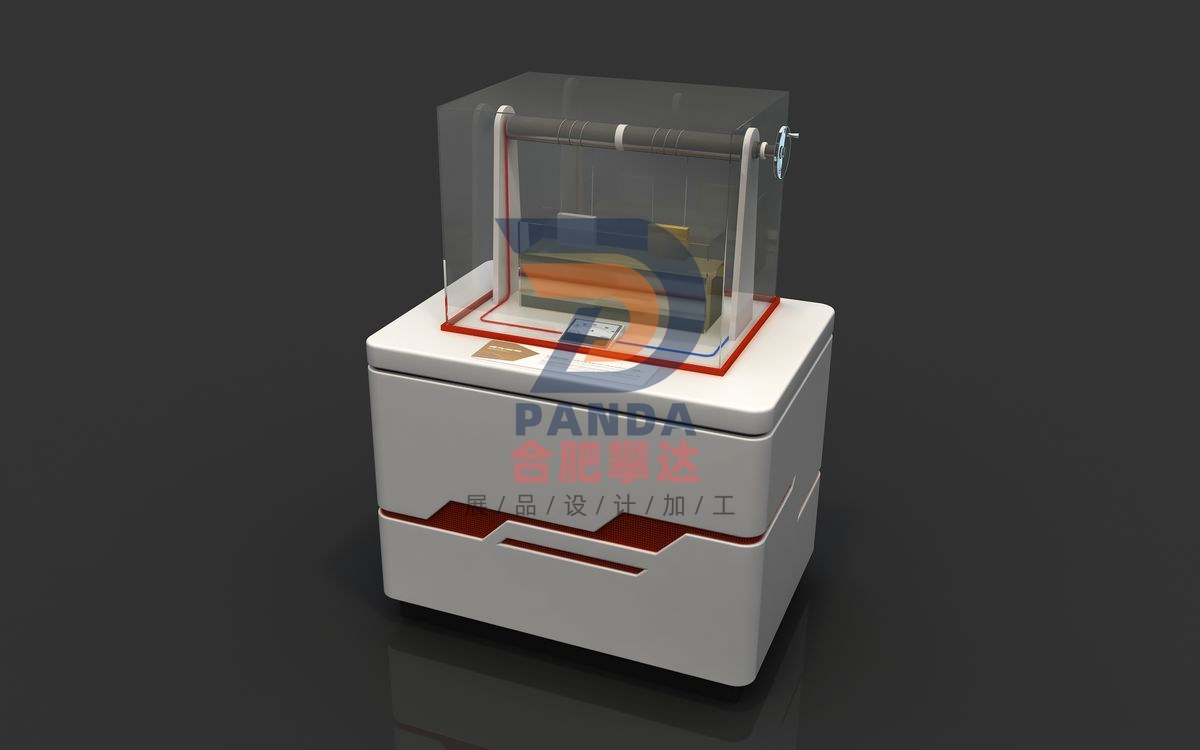
Voltaic Battery
Electromagnetism · Interactive
- DimensionsSubject to on-site plan
- PresentationInteractive
- PricingQuoted by manufacture spec
Voltaic Battery is a hands-on, mechanical & electromechanical interactive exhibit manufactured by Hefei Panda for science centers, children’s museums, discovery centers, STEM learning centers and family entertainment centers. Engineered for durable, robust, low-maintenance, high-traffic gallery installation, it turns abstract scientific concepts into direct, interactive visitor exploration. Hefei Panda is a global exhibit manufacturer exporting hands-on science displays to 50+ countries, with in-house engineering, fabrication, installation and commissioning.
Exhibit Summary
Voltaic Battery is a Interactive interactive exhibit in the Electromagnetism category, designed for science centers, children’s museums, discovery centers, STEM learning centers and family entertainment centers. Built as a hands-on, mechanical & electromechanical display, it turns an abstract scientific concept into direct, interactive visitor exploration, and is engineered for durable, low-maintenance, high-traffic gallery use.
Scientific Principle
With a persistent spirit of exploration, Volta discovered the concept of the battery via the unexpected discovery in Galvani's frog experiment, invented the world's first generator - the Voltaic pile, and ushered in a new era of electrical development.
Operation
The story of the invention of the voltaic battery: When anatomy professor Galvani was dissecting a frog, a student's scalpel gently touched the nerve of the frog's calf, and the frog immediately twitched. Galvani keenly felt that this was an excellent example for studying animal electricity, so he immediately started researching it and published an article entitled "Electricity in Muscle Movements" in 1791. After the publication of Galvani's work, European countries formed a research boom on animal electricity. Many people invested in this experiment. Volta conducted extensive research on this phenomenon and concluded that the electricity obtained in the experiment came from different metal tools that were in contact with each other. The frog only served to conduct the current. He called this electricity "contact current." To illustrate his point, Volta went on to conduct numerous experiments. He compared various metals according to the contact electromotive force between metals, and arranged the various metals into a table. Some of them are zinc-lead-tin-iron-copper-silver-gold-graphite. As long as any two metals in the table are brought into contact, the metal in the front will be positively charged and the metal in the back will be negatively charged. In this way, Volta fully explained the various animal electrical experiments done by Galvani and others in one fell swoop. In 1800, Volta conducted further experiments by placing a metal zinc ring on a copper ring, pressing it with a piece of paper or woolen ring soaked in salt water, and then placing the zinc ring and the copper ring. When different metals are immersed in an electrolyte, the chemical energy stored between atoms is converted into electrical energy by chemical reactions. The electrolyte will corrode the copper plate, so the copper ions will merge into the electrolyte to form a negatively charged copper electrode. However, zinc corrodes more easily than copper, leaving a more negatively charged zinc electrode. The potential of the copper electrode is lower than that of the electrolyte, but the potential of the zinc electrode is lower, so the copper and zinc electrodes form a potential difference. If this is repeated, 10, 20, and 30 stacks will form a column, which will produce an obvious current. This is what later generations call a voltaic pile or battery. It provides a tool to generate continuous electric current, making it possible to study the movement of electric charges, thus revealing the nature of electric current and bringing electricity to a new stage of development. Put a metal zinc ring on a copper ring, press it with a piece of salt-soaked paper or woolen ring, and then put the zinc ring and the copper ring. When different metals are immersed in an electrolyte, the chemical energy stored between atoms is converted into electrical energy by chemical reactions. The electrolyte will corrode the copper plate, so the copper ions will merge into the electrolyte to form a negatively charged copper electrode. However, zinc corrodes more easily than copper, leaving a more negatively charged zinc electrode. The potential of the copper electrode is lower than that of the electrolyte, but the potential of the zinc electrode is lower, so the copper and zinc electrodes form a potential difference.
Export-Ready Features
- Durable, robust construction for high-traffic gallery environments
- Low-maintenance electromechanical design with reliable, safe components
- Custom sizing, theming & multilingual labeling available
- OEM & turnkey exhibit solutions with full project management
- Overseas shipping, export documentation & on-site installation supported
- Shipped to science centers and museums in 50+ countries