
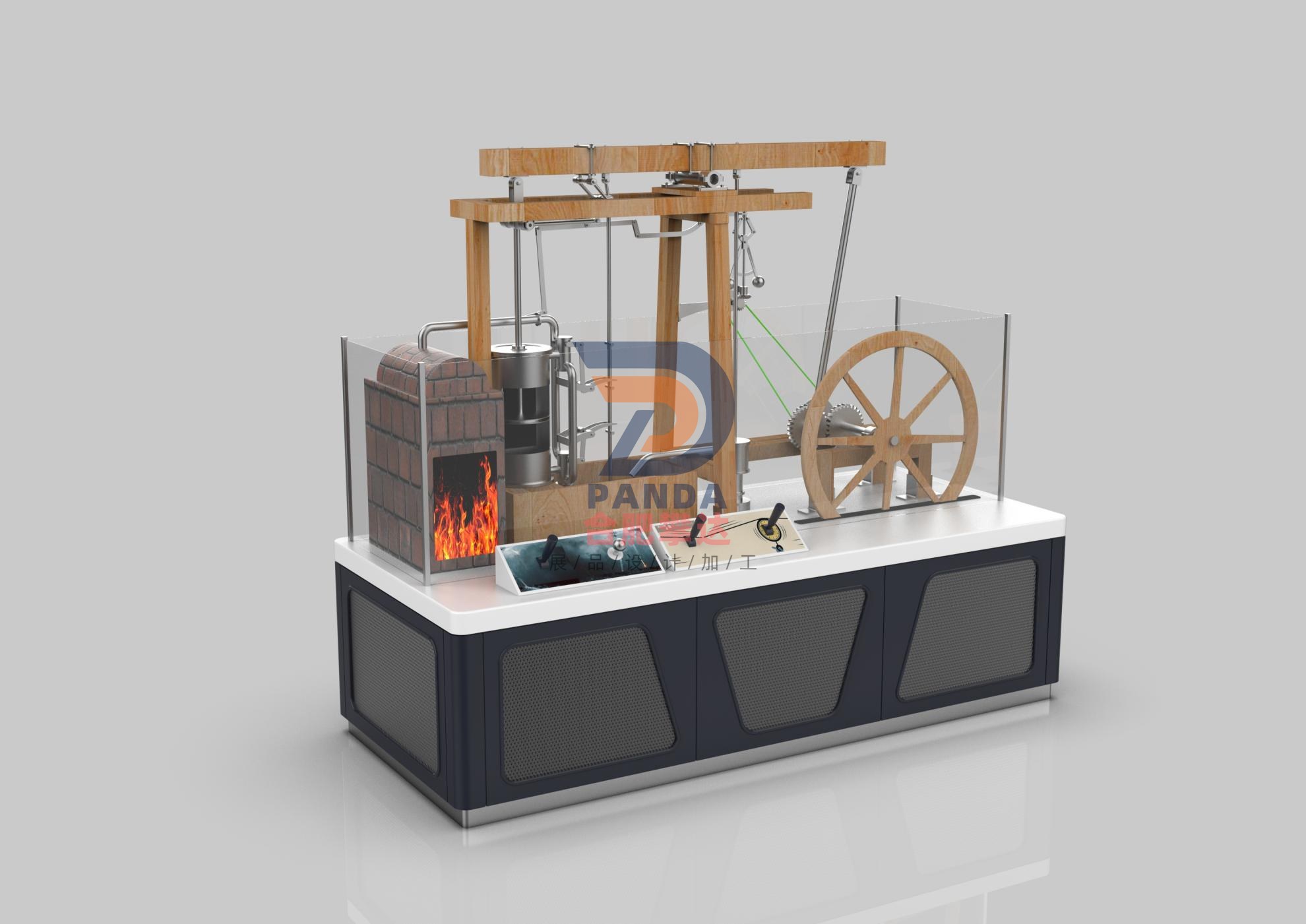
Steam Engine
Mechanics in Motion · Machinery + Multimedia Interaction
- Dimensions2800*1200*2700mm
- PresentationMachinery + Multimedia Interaction
- PricingQuoted by manufacture spec
Steam Engine is a hands-on, mechanical & electromechanical interactive exhibit manufactured by Hefei Panda for science centers, children’s museums, discovery centers, STEM learning centers and family entertainment centers. Engineered for durable, robust, low-maintenance, high-traffic gallery installation, it turns abstract scientific concepts into direct, interactive visitor exploration. Hefei Panda is a global exhibit manufacturer exporting hands-on science displays to 50+ countries, with in-house engineering, fabrication, installation and commissioning.
Exhibit Summary
Steam Engine is a Machinery + Multimedia Interaction interactive exhibit in the Mechanics in Motion category, designed for science centers, children’s museums, discovery centers, STEM learning centers and family entertainment centers. Built as a hands-on, mechanical & electromechanical display, it turns an abstract scientific concept into direct, interactive visitor exploration, and is engineered for durable, low-maintenance, high-traffic gallery use.
Scientific Principle
From 1765 to 1790, Watt improved the steam engine based on the Newcomen steam engine. The emergence of the Watt steam engine has far-reaching significance: first, the widespread use of steam engines brought mankind into the steam age. Second, the emergence of steam power freed factories from the constraints of hydraulic conditions. The speed of industrialization was recalled and industrial cities emerged. Third, the use of steam power brought about a revolution in the transportation industry. The emergence of railway transportation ushered in the railway era. The advent of steam turbines strengthened intercontinental connections.
Operation
The display uses the Watt steam engine as a model prototype, showing the combustion chamber conditions in the form of multimedia, causing the steam to expand and press the piston to do work, thereby driving the wheel to rotate. Viewers can select different fuels on the touch screen, such as wood, coal, oil or natural gas, and watch how long it takes to rotate the wheel under different fuels. 1. When there is no operation, the displays move on their own (at this time, coal is used as fuel); 2. When there is operation, the audience can choose different fuels to burn on the touch screen and watch the model move.
Export-Ready Features
- Durable, robust construction for high-traffic gallery environments
- Low-maintenance electromechanical design with reliable, safe components
- Custom sizing, theming & multilingual labeling available
- OEM & turnkey exhibit solutions with full project management
- Overseas shipping, export documentation & on-site installation supported
- Shipped to science centers and museums in 50+ countries