
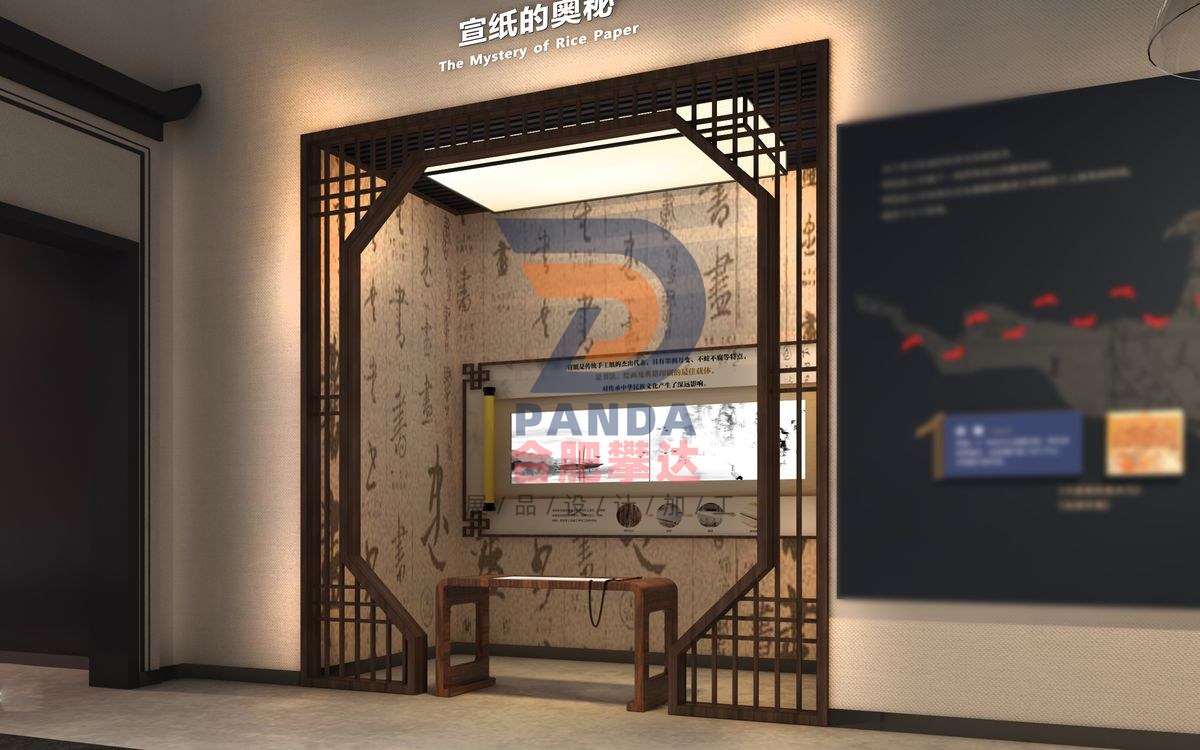
The Mystery of Rice Paper
Smart Technology · Interactive
- DimensionsSubject to on-site plan
- PresentationInteractive
- PricingQuoted by manufacture spec
The Mystery of Rice Paper is a hands-on, mechanical & electromechanical interactive exhibit manufactured by Hefei Panda for science centers, children’s museums, discovery centers, STEM learning centers and family entertainment centers. Engineered for durable, robust, low-maintenance, high-traffic gallery installation, it turns abstract scientific concepts into direct, interactive visitor exploration. Hefei Panda is a global exhibit manufacturer exporting hands-on science displays to 50+ countries, with in-house engineering, fabrication, installation and commissioning.
Exhibit Summary
The Mystery of Rice Paper is a Interactive interactive exhibit in the Smart Technology category, designed for science centers, children’s museums, discovery centers, STEM learning centers and family entertainment centers. Built as a hands-on, mechanical & electromechanical display, it turns an abstract scientific concept into direct, interactive visitor exploration, and is engineered for durable, low-maintenance, high-traffic gallery use.
Scientific Principle
The exhibition introduces the unique features of rice paper, the difference in production technology and writing effect between raw and cooked rice paper, allowing the audience to discover the ingenuity of rice paper production via direct experience and exploration.
Operation
Characteristics of rice paper: Rice paper has good ink wetting properties, is durable and resistant to aging, and is not prone to discoloration. Rice paper has the characteristics of tough but moisturizing, smooth but not slippery, white and dense, pure texture, non-destructive and strong ink wetting properties, and has unique penetrating and lubricating properties. When writing and painting, "ink is divided into five colors," that is, one stroke is completed, with deep and light shades, the texture is visible, the ink rhyme is clear, and the layers are clear, and it can also "not rot or be mothed for thousands of years." Rice paper has been known as "the king of paper and thousand-year-old paper" since ancient times. The Palace Museum and many foreign museums have rice paper works. A large number of rare ancient books, calligraphy and paintings by famous artists have been preserved to this day because of the use of rice paper. Rice paper making is a traditional handicraft in Jingxian County, Anhui Province, and has been included in the national intangible cultural heritage list. The main ingredients for making rice paper include carbolic acid, alkali and bleaching powder. Rice paper raw materials must first be soaked with lime. The lime combines with water to generate calcium hydroxide. At the same time, a large amount of heat is released, which increases the temperature of the aqueous solution and dissolves pectin and lignin. Alkali is used to cook sandalwood bark and straw at high temperatures, and also dissolves pectin and lignin. Pulping is an important step in manufacturing rice paper. The traditional method is to use different processing methods according to different raw material properties and different seasonal climates, such as soaking in water, mortar, washing, cooking, sun and rain, dew refining, etc. The process of soaking in water, mortar, washing, and steaming is called "grading cooking"; the process of being exposed to the sun, rain, and dew is called "sun bleaching." The production process takes 1 to 2 years.
Export-Ready Features
- Durable, robust construction for high-traffic gallery environments
- Low-maintenance electromechanical design with reliable, safe components
- Custom sizing, theming & multilingual labeling available
- OEM & turnkey exhibit solutions with full project management
- Overseas shipping, export documentation & on-site installation supported
- Shipped to science centers and museums in 50+ countries