
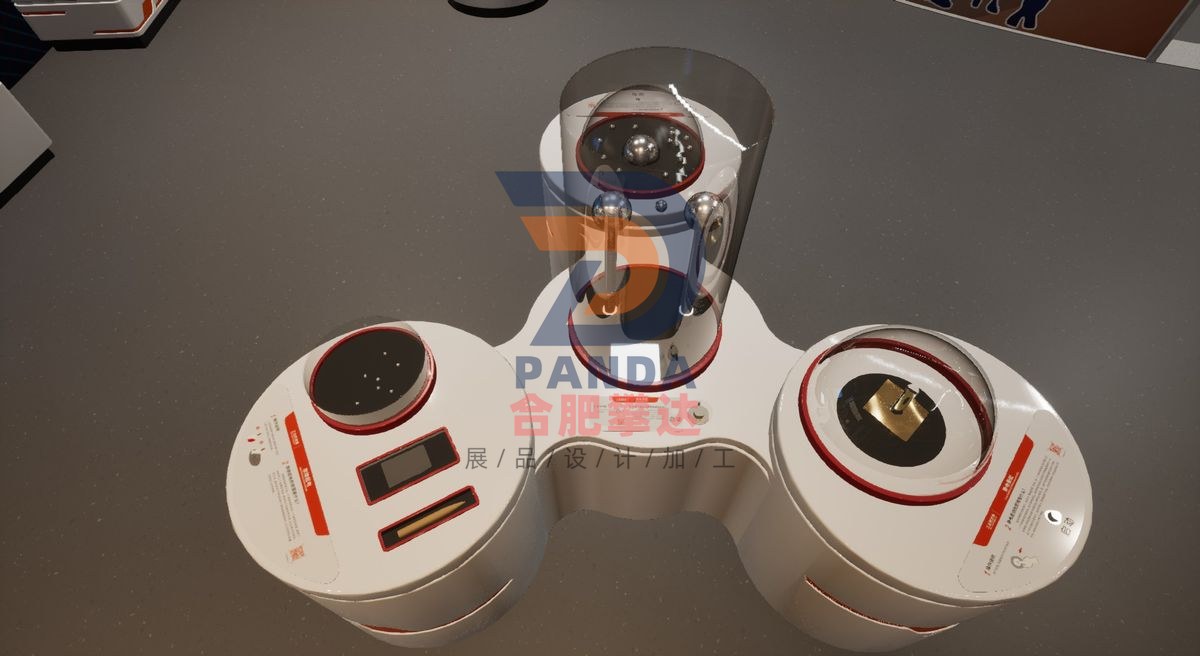
Static electricity combination - electrostatic bell
Electromagnetism · Interactive
- DimensionsSubject to on-site plan
- PresentationInteractive
- PricingQuoted by manufacture spec
Static electricity combination - electrostatic bell is a hands-on, mechanical & electromechanical interactive exhibit manufactured by Hefei Panda for science centers, children’s museums, discovery centers, STEM learning centers and family entertainment centers. Engineered for durable, robust, low-maintenance, high-traffic gallery installation, it turns abstract scientific concepts into direct, interactive visitor exploration. Hefei Panda is a global exhibit manufacturer exporting hands-on science displays to 50+ countries, with in-house engineering, fabrication, installation and commissioning.
Exhibit Summary
Static electricity combination - electrostatic bell is a Interactive interactive exhibit in the Electromagnetism category, designed for science centers, children’s museums, discovery centers, STEM learning centers and family entertainment centers. Built as a hands-on, mechanical & electromechanical display, it turns an abstract scientific concept into direct, interactive visitor exploration, and is engineered for durable, low-maintenance, high-traffic gallery use.
Scientific Principle
This exhibition reveals the invisible electrostatic and interaction between charges in life: the phenomenon of similar charges repelling each other and different charges attracting each other. The main purpose is to inspire the audience to use existing knowledge via intuitive phenomena and explore the mysteries behind the phenomena via serious thinking and analysis.
Operation
Static electricity is formed by the redistribution of charges caused by friction, or by the redistribution of charges caused by the mutual attraction of charges. Electrostatic effect: When a charged object moves close to an insulated conductor, the conductor becomes charged due to induction. The concept of magnet attraction and repulsion: Every magnet has positive and negative poles. There is a magnetic field around the magnet. When the same poles of two magnets are close to each other, due to the mutual repulsion of the magnetic field, the two magnets are like a force pulling them apart. When two different poles are close, they will attract. Simply put, magnet repulsion is caused by the magnetic field in the magnet. This is what is said in physics that like poles repel and opposite poles attract. The concept of magnet attraction and repulsion: Every magnet has positive and negative poles. There is a magnetic field around the magnet. When the same poles of two magnets are close to each other, due to the mutual repulsion of the magnetic field, the two magnets are like a force pulling them apart. When two different poles are close, they will attract. Simply put, magnet repulsion is caused by the magnetic field in the magnet. This is what is said in physics that like poles repel and opposite poles attract.
Export-Ready Features
- Durable, robust construction for high-traffic gallery environments
- Low-maintenance electromechanical design with reliable, safe components
- Custom sizing, theming & multilingual labeling available
- OEM & turnkey exhibit solutions with full project management
- Overseas shipping, export documentation & on-site installation supported
- Shipped to science centers and museums in 50+ countries