
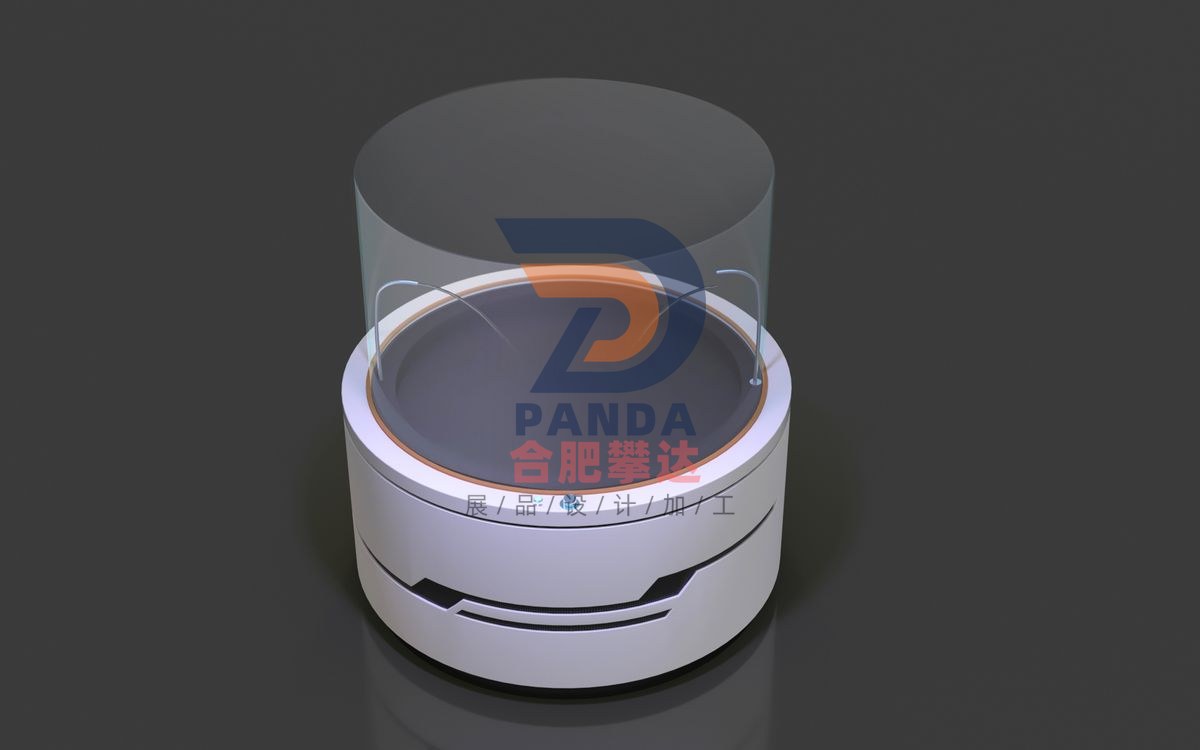
Why water deflects
Mechanics in Motion · Interactive
- DimensionsSubject to on-site plan
- PresentationInteractive
- PricingQuoted by manufacture spec
Why water deflects is a hands-on, mechanical & electromechanical interactive exhibit manufactured by Hefei Panda for science centers, children’s museums, discovery centers, STEM learning centers and family entertainment centers. Engineered for durable, robust, low-maintenance, high-traffic gallery installation, it turns abstract scientific concepts into direct, interactive visitor exploration. Hefei Panda is a global exhibit manufacturer exporting hands-on science displays to 50+ countries, with in-house engineering, fabrication, installation and commissioning.
Exhibit Summary
Why water deflects is a Interactive interactive exhibit in the Mechanics in Motion category, designed for science centers, children’s museums, discovery centers, STEM learning centers and family entertainment centers. Built as a hands-on, mechanical & electromechanical display, it turns an abstract scientific concept into direct, interactive visitor exploration, and is engineered for durable, low-maintenance, high-traffic gallery use.
Scientific Principle
The exhibition aims to let the audience grasp a hypothetical force based on Newtonian mechanics - the concept of the Coriolis force that describes the motion of a rotating system.
Operation
From a physical point of view, the Coriolis force, like the centrifugal force, is not a real force that exists in the inertial frame, but is a manifestation of the inertial effect in a non-inertial frame. It is also an inertial force introduced in the inertial reference frame to facilitate calculations. In 1835, French meteorologist Coriolis proposed that in order to describe the motion of a rotating system, an imaginary force needs to be introduced into the equation of motion, which is the Coriolis force. The Coriolis force of linear motion of particles in a rotating system is based on Newtonian mechanics. The Coriolis force is a description of the deflection of a linear motion of a particle in a rotating system due to inertia relative to the linear motion of the rotating system. The Coriolis force comes from the inertia of an object's motion. Particles that move linearly in a rotating system have a tendency to continue moving along the original direction of motion due to inertia. However, since the system itself is rotating, after a period of movement, the position of the particle in the system will change, and the direction of its original movement trend will deviate to a certain extent if viewed from the perspective of the rotating system.
Export-Ready Features
- Durable, robust construction for high-traffic gallery environments
- Low-maintenance electromechanical design with reliable, safe components
- Custom sizing, theming & multilingual labeling available
- OEM & turnkey exhibit solutions with full project management
- Overseas shipping, export documentation & on-site installation supported
- Shipped to science centers and museums in 50+ countries