
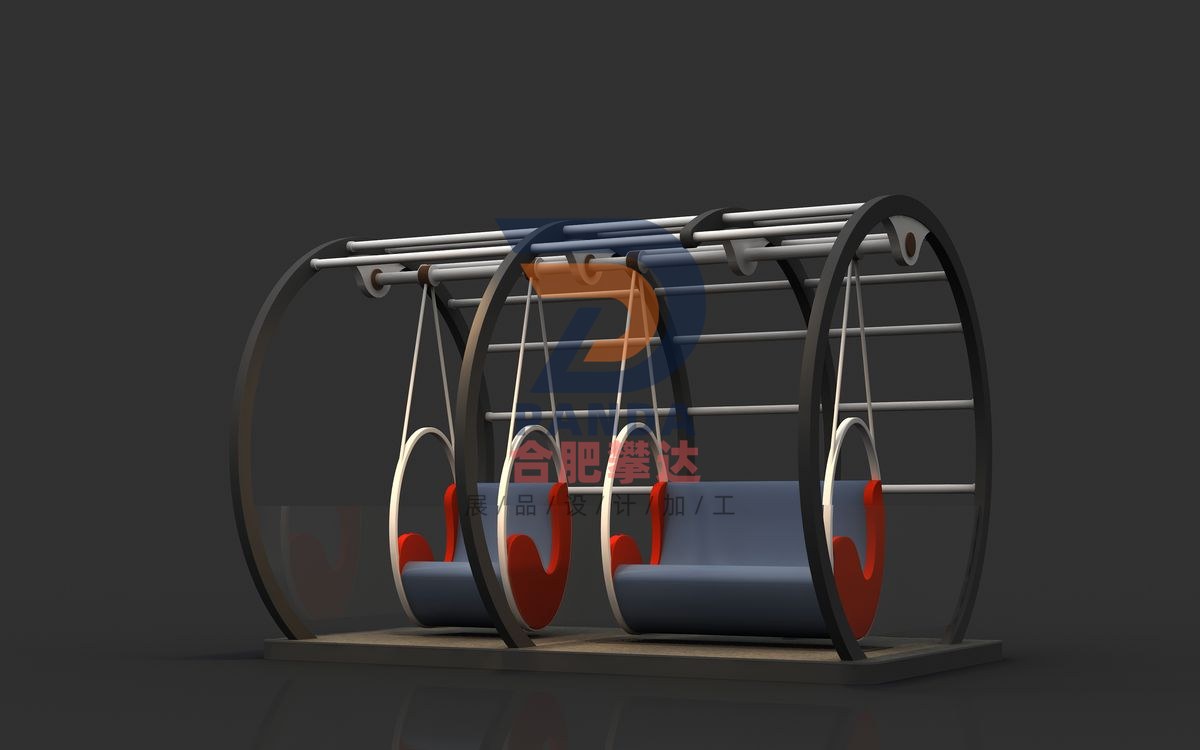
Electromagnetic Swing
Electromagnetism · Interactive
- DimensionsSubject to on-site plan
- PresentationInteractive
- PricingQuoted by manufacture spec
Electromagnetic Swing is a hands-on, mechanical & electromechanical interactive exhibit manufactured by Hefei Panda for science centers, children’s museums, discovery centers, STEM learning centers and family entertainment centers. Engineered for durable, robust, low-maintenance, high-traffic gallery installation, it turns abstract scientific concepts into direct, interactive visitor exploration. Hefei Panda is a global exhibit manufacturer exporting hands-on science displays to 50+ countries, with in-house engineering, fabrication, installation and commissioning.
Exhibit Summary
Electromagnetic Swing is a Interactive interactive exhibit in the Electromagnetism category, designed for science centers, children’s museums, discovery centers, STEM learning centers and family entertainment centers. Built as a hands-on, mechanical & electromechanical display, it turns an abstract scientific concept into direct, interactive visitor exploration, and is engineered for durable, low-maintenance, high-traffic gallery use.
Scientific Principle
Through the electromagnet hidden in the floor just below the pedal, it generates magnetism after being energized, and generates repulsive force with the permanent magnet hidden on the pedal, pushing the swing to swing; after the power is turned off, the magnetism of the electromagnet disappears, and the swing gradually stops. The purpose is to let the audience grasp electromagnets and permanent magnets, as well as the characteristics of magnets with same-sex repulsions and opposite-sex attractions.
Operation
Electromagnets and permanent magnets: Magnetism is a force that works without contact. Magnets whose magnetism is always present are called permanent magnets, such as compasses. Electromagnets are an application of the magnetic effect of electric current. They are made by winding a circle of wire around the outside of an iron core. Unlike permanent magnets, which have constant magnetism, the magnetism of electromagnets "comes and goes when called upon." Magnet characteristics: Every magnet has positive and negative poles. There is a magnetic field around the magnet. When the same poles of two magnets are close to each other, due to the mutual repulsion of the magnetic field, the two magnets are like a force pulling them apart. When two different poles are close, they will attract. Simply put, magnet repulsion is caused by the magnetic field in the magnet. This is what is said in physics that like poles repel and opposite poles attract. Every magnet has positive and negative poles. There is a magnetic field around the magnet. When the same poles of two magnets are close to each other, due to the mutual repulsion of the magnetic field, the two magnets are like a force pulling them apart. When two different poles are close, they will attract. Simply put, magnet repulsion is caused by the magnetic field in the magnet. This is what is said in physics that like poles repel and opposite poles attract.
Export-Ready Features
- Durable, robust construction for high-traffic gallery environments
- Low-maintenance electromechanical design with reliable, safe components
- Custom sizing, theming & multilingual labeling available
- OEM & turnkey exhibit solutions with full project management
- Overseas shipping, export documentation & on-site installation supported
- Shipped to science centers and museums in 50+ countries