
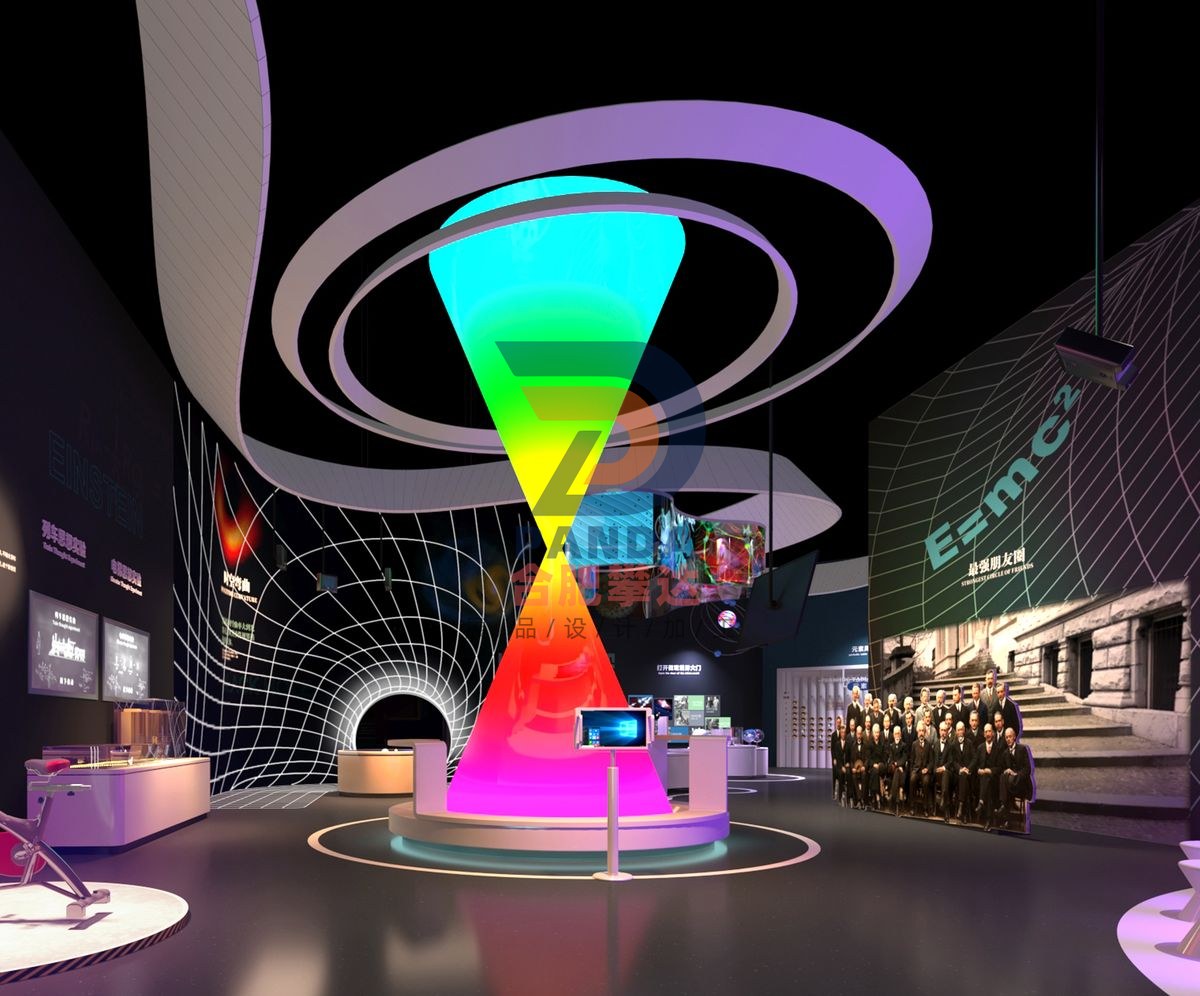
Light Cone
Aerospace · Interactive
- DimensionsSubject to on-site plan
- PresentationInteractive
- PricingQuoted by manufacture spec
Light Cone is a hands-on, mechanical & electromechanical interactive exhibit manufactured by Hefei Panda for science centers, children’s museums, discovery centers, STEM learning centers and family entertainment centers. Engineered for durable, robust, low-maintenance, high-traffic gallery installation, it turns abstract scientific concepts into direct, interactive visitor exploration. Hefei Panda is a global exhibit manufacturer exporting hands-on science displays to 50+ countries, with in-house engineering, fabrication, installation and commissioning.
Exhibit Summary
Light Cone is a Interactive interactive exhibit in the Aerospace category, designed for science centers, children’s museums, discovery centers, STEM learning centers and family entertainment centers. Built as a hands-on, mechanical & electromechanical display, it turns an abstract scientific concept into direct, interactive visitor exploration, and is engineered for durable, low-maintenance, high-traffic gallery use.
Scientific Principle
Einstein overturned Newton's absolute view of space and time, unified time and space, and proposed the concept of four-dimensional space and time. The exhibition items are based on the "light cone" proposed by Hawking as a prototype. Through the large-scale light cone shape, the audience can grasp Newton and Einstein's conception of space and time, and feel and experience the concept of space and time that transcends conventional thinking.
Operation
All events in the universe spread to all directions over time. As time increases, the scope of the event's influence also becomes larger. The scopes in each time period are stacked together, and finally a cone is formed. In "A Brief History of Time", Hawking used the light cone model to explain the spatial coordinates of time: the light cone is hourglass-shaped, with the midpoint being the present, and its impact on other things spreads to the past and future like water waves at a speed no greater than the speed of light. The vertical coordinate system is time, and the horizontal direction is space. The lower cone represents the past, the middle intersection represents the present, and the upper inverted cone represents the future. The cause of an event and all its effects on the future are within this cone. In "A Brief History of Time", Hawking used the light cone model to explain the spatial coordinates of time: the light cone is hourglass-shaped, with the midpoint being the present, and its impact on other things spreads to the past and future like water waves at a speed no greater than the speed of light. The vertical coordinate system is time, and the horizontal direction is space. The lower cone represents the past, the middle intersection represents the present, and the upper inverted cone represents the future. The cause of an event and all its effects on the future are within this cone.
Export-Ready Features
- Durable, robust construction for high-traffic gallery environments
- Low-maintenance electromechanical design with reliable, safe components
- Custom sizing, theming & multilingual labeling available
- OEM & turnkey exhibit solutions with full project management
- Overseas shipping, export documentation & on-site installation supported
- Shipped to science centers and museums in 50+ countries