
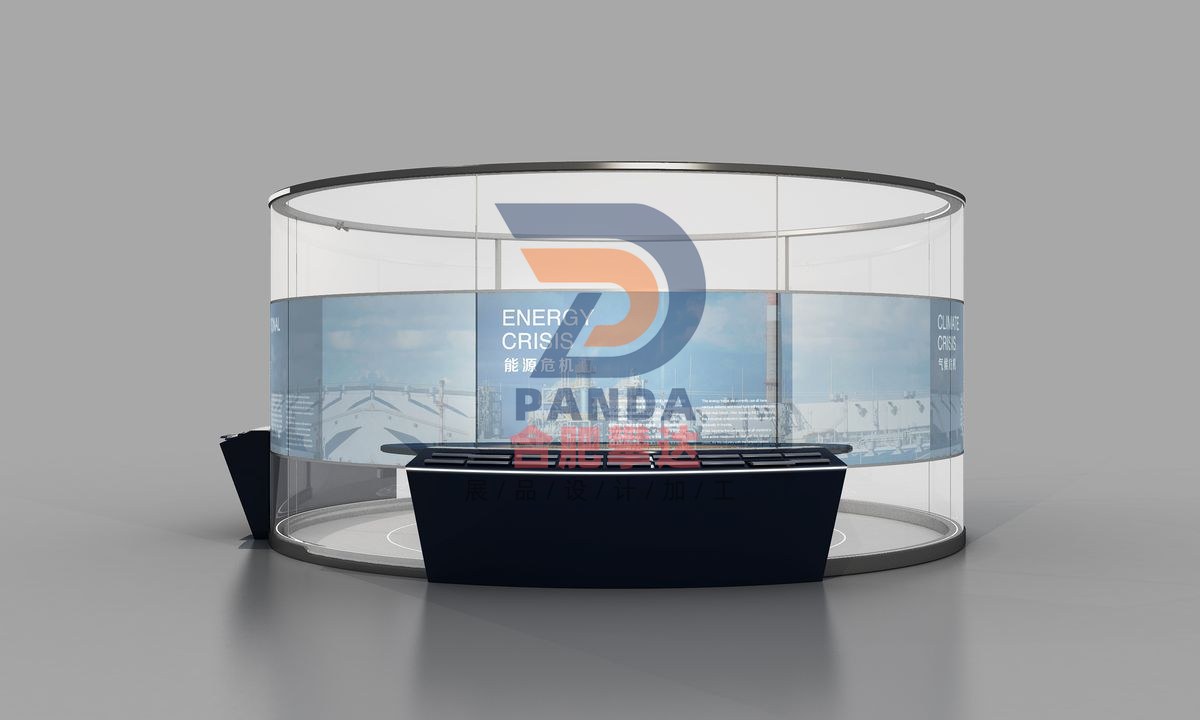
Energy Crisis
Earth & Planet · Interactive
- DimensionsSubject to on-site plan
- PresentationInteractive
- PricingQuoted by manufacture spec
Energy Crisis is a hands-on, mechanical & electromechanical interactive exhibit manufactured by Hefei Panda for science centers, children’s museums, discovery centers, STEM learning centers and family entertainment centers. Engineered for durable, robust, low-maintenance, high-traffic gallery installation, it turns abstract scientific concepts into direct, interactive visitor exploration. Hefei Panda is a global exhibit manufacturer exporting hands-on science displays to 50+ countries, with in-house engineering, fabrication, installation and commissioning.
Exhibit Summary
Energy Crisis is a Interactive interactive exhibit in the Earth & Planet category, designed for science centers, children’s museums, discovery centers, STEM learning centers and family entertainment centers. Built as a hands-on, mechanical & electromechanical display, it turns an abstract scientific concept into direct, interactive visitor exploration, and is engineered for durable, low-maintenance, high-traffic gallery use.
Scientific Principle
Hands-on graphics and text to let the public grasp the current crisis situation of fossil fuel shortage.
Operation
Why is the world falling into a black energy dilemma? As an important material basis for human survival and development, fossil fuels such as coal, oil, and natural gas have supported the progress of human civilization and economic and social development in the past 200 years. However, the non-renewable nature of fossil energy and humankind's huge consumption of it have made fossil energy gradually exhausted. There has been no major breakthrough in the development and utilization of new energy. The world is in the midst of an unprecedented, profound and complex energy crisis. Fossil fuels – the main culprit of CO2 emissions Fossil fuels are composed of hydrocarbons and release large amounts of carbon dioxide when burned. According to statistics, global carbon emissions in 2022 will be 40.5 billion tons, of which carbon dioxide emissions caused by fossil fuels will reach 36.6 billion tons, accounting for 90% of total global carbon dioxide emissions, the highest level in history. Currently, the world's energy supply mainly relies on fossil energy. However, fossil fuels are not renewable, and the energy crisis has become a hot topic of concern around the world. According to estimates and speculations, some of the fossil fuels will be exhausted in the 21st century, and some will lose their mining value due to high mining costs and a series of environmental problems caused by development and use. It is an indisputable fact that fossil fuels will eventually be exhausted. coal Coal is the remains of ancient plants. It is buried under the earth's crust and acts under the pressure and temperature conditions of the earth's crust to isolate the air. The carbon fossil minerals produced are mainly mined by humans and used as fuel. According to the different degrees of carbonization of coal, it can be divided into peat, lignite (brown coal, black lignite), bituminous coal (raw coal), and anthracite coal. Anthracite has the highest degree of carbonization and peat has the lowest degree of carbonization. Global coal proven reserves and mining years In 2018, global proven coal reserves were 1054.782 million tons; coal production was 3.9168 million tons of oil equivalent, and the reserves-to-production ratio was 135 years of mining. oil Petroleum, also known as crude oil, is a viscous, dark brown (sometimes greenish) liquid. Most geologists believe that petroleum formed gradually over a long period of compression and heating of ancient organic matter. There are oil reserves in parts of the upper crust. Petroleum is composed of a mixture of different hydrocarbons, the main component of which is alkanes. In addition, petroleum also contains elements such as sulfur, oxygen, nitrogen, phosphorus, and vanadium. Petroleum is mainly used as fuel and gasoline. Fuel oil and gasoline constitute one of the most important primary energy sources in the world. Refined oil Gasoline: Gasoline is produced by the fractionation of petroleum or the cracking of heavy distillates. However, the straight-run gasoline produced directly from the crude oil distillation unit is not used as engine fuel alone. Instead, it is refined and blended, and sometimes additives (such as antiknock agent tetraethyl lead) are added to produce commercial gasoline. Kerosene: Kerosene is a type of light petroleum product. It is obtained by fractionation or cracking of natural petroleum or artificial petroleum. Diesel: Diesel is a light petroleum product, mainly made from diesel fractions produced by crude oil distillation, catalytic cracking, thermal cracking, hydrocracking, petroleum coking and other processes; it can also be produced from shale oil processing and coal liquefaction. In 2018, the world's proven oil reserves were 244.1 billion tons; oil production was 4.4743 billion tons, and the reserves-to-production ratio was 54.6 years of exploitation. natural gas Natural gas is a gaseous fossil fuel composed primarily of methane. Natural gas is a gaseous hydrocarbon produced by the slow transformation, metamorphism and cracking of ancient biological remains that have been deposited underground for a long time. It mainly exists in oil fields and natural gas fields, and also in small amounts in coal seams. Global natural gas proven reserves and production years In 2018, the world's proven natural gas reserves were 196.9 trillion cubic meters; natural gas production was 3,867.9 billion cubic meters, and the reserves-to-production ratio was 50.9 years of exploitation. The displays start from the perspective of energy shortage crisis, select the actual situation of 18 energy sources in the world to introduce pictures and texts, and adopt a pull-out panel structure to show the audience the crisis faced by energy. 18 groups of pull-out mechanisms can meet the needs of multiple people for hands-on participation at the same time.
Export-Ready Features
- Durable, robust construction for high-traffic gallery environments
- Low-maintenance electromechanical design with reliable, safe components
- Custom sizing, theming & multilingual labeling available
- OEM & turnkey exhibit solutions with full project management
- Overseas shipping, export documentation & on-site installation supported
- Shipped to science centers and museums in 50+ countries