
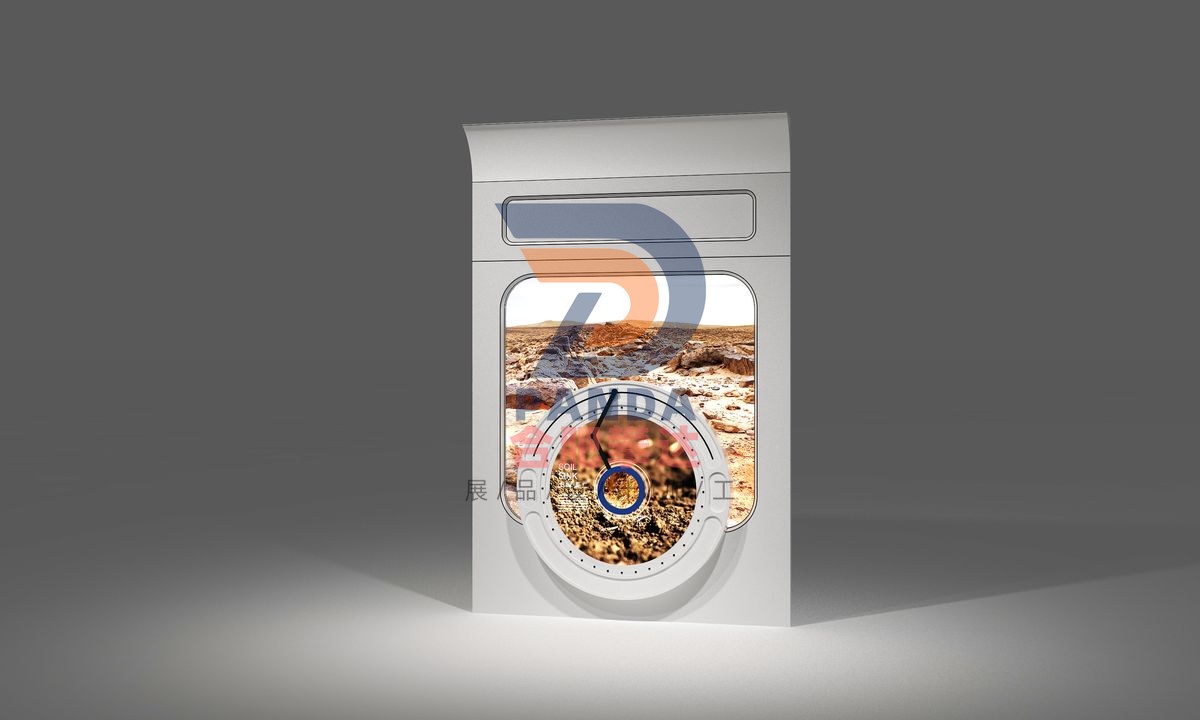
Soil Carbon Sink
Earth & Planet · Interactive
- DimensionsSubject to on-site plan
- PresentationInteractive
- PricingQuoted by manufacture spec
Soil Carbon Sink is a hands-on, mechanical & electromechanical interactive exhibit manufactured by Hefei Panda for science centers, children’s museums, discovery centers, STEM learning centers and family entertainment centers. Engineered for durable, robust, low-maintenance, high-traffic gallery installation, it turns abstract scientific concepts into direct, interactive visitor exploration. Hefei Panda is a global exhibit manufacturer exporting hands-on science displays to 50+ countries, with in-house engineering, fabrication, installation and commissioning.
Exhibit Summary
Soil Carbon Sink is a Interactive interactive exhibit in the Earth & Planet category, designed for science centers, children’s museums, discovery centers, STEM learning centers and family entertainment centers. Built as a hands-on, mechanical & electromechanical display, it turns an abstract scientific concept into direct, interactive visitor exploration, and is engineered for durable, low-maintenance, high-traffic gallery use.
Scientific Principle
The displays create an ecological scene, and via simulated observation and exploration, introduce the concept and role of soil carbon sink, as well as the importance of soil ecosystem in climate change and environmental protection, and deepen the public's understanding of the principles of soil carbon storage and carbon sequestration.
Operation
Soil carbon sink is an important path to reduce carbon emissions, achieve carbon neutrality, and mitigate global climate change. In the global carbon cycle, soil carbon pools account for more than 90% of the carbon pools in terrestrial ecosystems, which is approximately 3 to 4 times that of vegetation carbon pools and 2 to 3 times that of atmospheric carbon pools. The carbon stored in soil originally came from the atmosphere. Then it enters the soil layer in the form of root exudates, dead roots or litter, and is converted into soil organic matter and stored in the soil under the action of microorganisms in the soil, forming a soil carbon sink. The annual carbon sink of surface soil (0-20cm) is 30% higher than that of deep soil (20-40cm), but the carbon in deep soil is persistently sequestered carbon and can remain stable for a long time. Surface soil undergoes frequent exchanges of organic carbon between soil-atmosphere, soil-organisms and soil-rivers (oceans) via various channels such as respiration, river erosion and transportation, plant photosynthesis, and littering of animal and plant residues. The amount of organic carbon entering and exiting is restricted by various factors. For the soil in a certain area, when the carbon released is greater than the carbon absorbed, it is a carbon source; when the carbon absorbed is greater than the carbon released, it becomes a carbon sink. The displays are designed to enable the audience to discover about soil carbon sinks and recognize the importance of ecosystems via mechanical hands-on triggers and screen playback of relevant content, and stimulate their interest and action in environmental protection.
Export-Ready Features
- Durable, robust construction for high-traffic gallery environments
- Low-maintenance electromechanical design with reliable, safe components
- Custom sizing, theming & multilingual labeling available
- OEM & turnkey exhibit solutions with full project management
- Overseas shipping, export documentation & on-site installation supported
- Shipped to science centers and museums in 50+ countries