
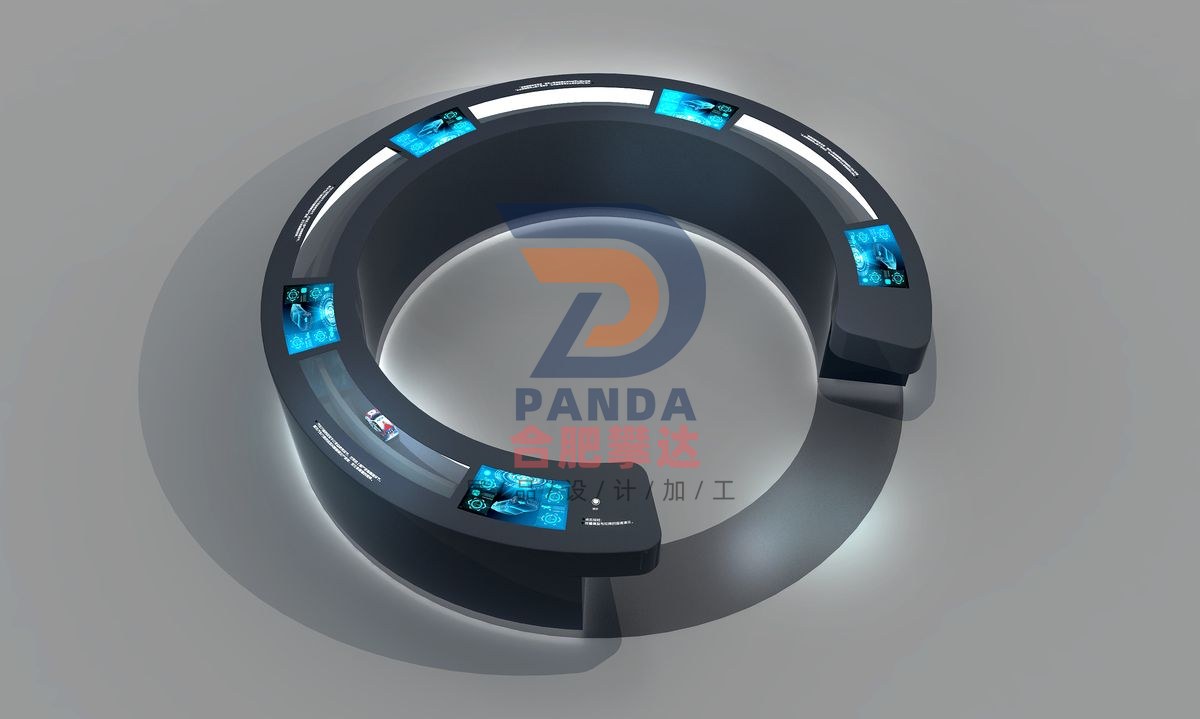
Carbon Reduction in the Whole Life Cycle
Earth & Planet · Interactive
- DimensionsSubject to on-site plan
- PresentationInteractive
- PricingQuoted by manufacture spec
Carbon Reduction in the Whole Life Cycle is a hands-on, mechanical & electromechanical interactive exhibit manufactured by Hefei Panda for science centers, children’s museums, discovery centers, STEM learning centers and family entertainment centers. Engineered for durable, robust, low-maintenance, high-traffic gallery installation, it turns abstract scientific concepts into direct, interactive visitor exploration. Hefei Panda is a global exhibit manufacturer exporting hands-on science displays to 50+ countries, with in-house engineering, fabrication, installation and commissioning.
Exhibit Summary
Carbon Reduction in the Whole Life Cycle is a Interactive interactive exhibit in the Earth & Planet category, designed for science centers, children’s museums, discovery centers, STEM learning centers and family entertainment centers. Built as a hands-on, mechanical & electromechanical display, it turns an abstract scientific concept into direct, interactive visitor exploration, and is engineered for durable, low-maintenance, high-traffic gallery use.
Scientific Principle
Through car models and animation demonstrations, the audience can grasp the energy conservation and emission reduction of new energy vehicles in the whole life cycle.
Operation
Emissions from the automobile industry not only come from the use link, but also from the upstream industrial chain manufacturing link. Solving the emissions problem in the automotive industry requires a full industry chain and full life cycle perspective. Carbon reduction is not only reflected in whether the cars produced have zero emissions, but also in the entire raw material supply end, production end and after-sales process. For example, in the research and development stage, modular design is added to reduce carbon emissions in the disassembly and recycling stages; in the production process, green and environmentally friendly renewable materials are used to reduce carbon emissions; and for upstream and downstream suppliers, OEMs can also add more carbon emission indicator requirements to promote more carbon reduction in the parts manufacturing process. First of all, at the design level, we must not only consider whether fuel economy and emissions meet standards, but also consider the dismantling and material reuse of vehicles during scrapping and recycling. Secondly, proactively upgrade production line equipment, improve processes and efficiency, reduce material loss, reduce unnecessary waste of resources, and use clean energy as production power, such as wind energy, solar energy, water energy, etc. At the user level, increase the construction of basic charging facilities. The displays use rails to carry car models throughout the entire hands-on link, and combine multimedia images to illustrate the five stages of new energy vehicles (design, production, use, scrapping, and recycling).
Export-Ready Features
- Durable, robust construction for high-traffic gallery environments
- Low-maintenance electromechanical design with reliable, safe components
- Custom sizing, theming & multilingual labeling available
- OEM & turnkey exhibit solutions with full project management
- Overseas shipping, export documentation & on-site installation supported
- Shipped to science centers and museums in 50+ countries