
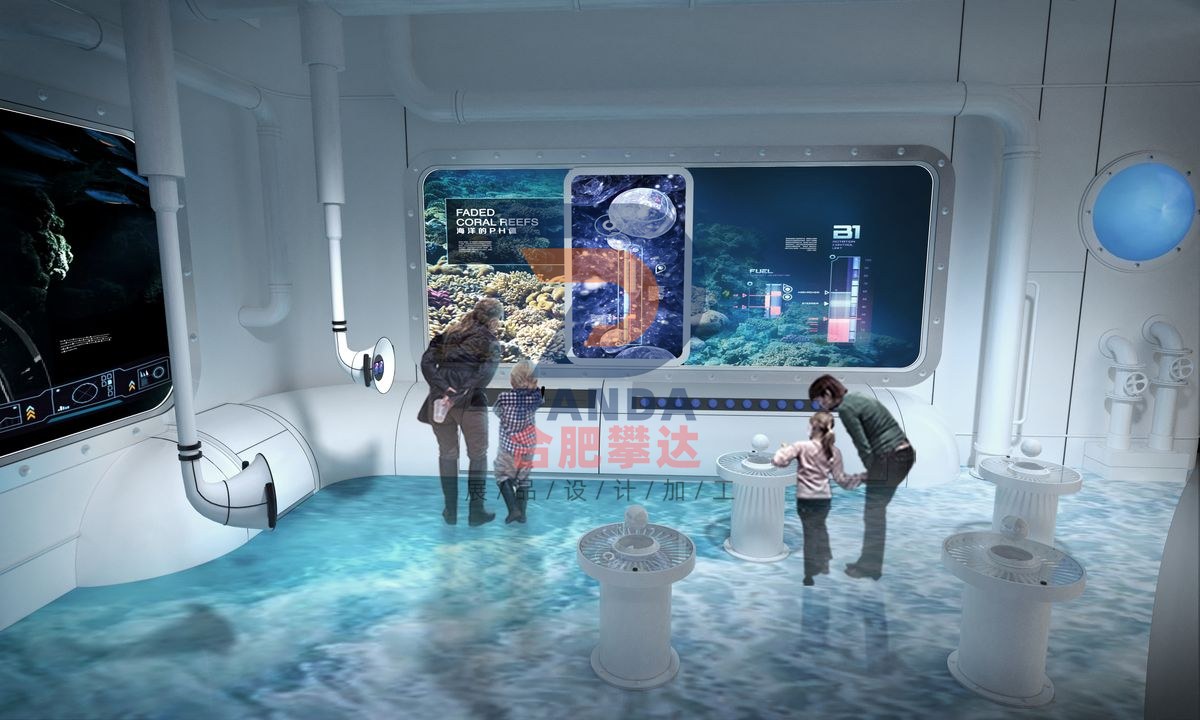
Ocean pH
Earth & Planet · Interactive
- DimensionsSubject to on-site plan
- PresentationInteractive
- PricingQuoted by manufacture spec
Ocean pH is a hands-on, mechanical & electromechanical interactive exhibit manufactured by Hefei Panda for science centers, children’s museums, discovery centers, STEM learning centers and family entertainment centers. Engineered for durable, robust, low-maintenance, high-traffic gallery installation, it turns abstract scientific concepts into direct, interactive visitor exploration. Hefei Panda is a global exhibit manufacturer exporting hands-on science displays to 50+ countries, with in-house engineering, fabrication, installation and commissioning.
Exhibit Summary
Ocean pH is a Interactive interactive exhibit in the Earth & Planet category, designed for science centers, children’s museums, discovery centers, STEM learning centers and family entertainment centers. Built as a hands-on, mechanical & electromechanical display, it turns an abstract scientific concept into direct, interactive visitor exploration, and is engineered for durable, low-maintenance, high-traffic gallery use.
Scientific Principle
The displays use an hands-on form of machinery and multimedia to quantitatively show the results of acidification caused by large amounts of carbon dioxide entering the ocean, allowing the audience to grasp the impact of different degrees of ocean acidification on marine life and ecology.
Operation
Ocean acidification means that seawater is gradually becoming acidic due to the ocean absorbing excess carbon dioxide from the atmosphere. The increase in seawater acidity will change the chemical balance of seawater, posing a huge threat to various marine organisms and even ecosystems that rely on the stability of the chemical environment. Ocean pH is a measure of the acidity or alkalinity of the ocean. The ocean is weakly alkaline due to the hydrolysis of weakly acidic anions, and its pH value generally varies between 8.0 and 8.5. The pH value of ocean surface water is about 8.2. However, since the industrial revolution, more than 1/3 of the carbon dioxide released by human activities has been absorbed by the ocean, and the pH of seawater has dropped by 0.1, which also means that the acidity of seawater has increased by 30%. This phenomenon in which seawater gradually becomes acidic as the ocean absorbs excess carbon dioxide from the atmosphere is called ocean acidification. As the acidity of seawater increases, the chemical balance of the ocean's own carbonates is broken, posing a huge threat to various marine organisms and even ecosystems that rely on the stability of the chemical environment. From bacteria to fish, many organisms have been revealed to be negatively affected by ocean acidification. The reduction or demise of marine germplasm resources caused by ocean acidification will affect the balance of the entire marine ecosystem along the food chain. At the same time, the accumulation of pollutants and toxins will have a negative impact on human marine food and increase human health risks. The displays aim to show the audience the huge threat that ocean acidification poses to marine ecology and marine life. From bacteria to fish, many organisms have been revealed to be negatively affected by ocean acidification. The reduction or demise of marine germplasm resources caused by ocean acidification will affect the balance of the entire marine ecosystem along the food chain. At the same time, the accumulation of pollutants and toxins will have a negative impact on human marine food and increase human health risks. In order to fit the theme of the displays, a large screen is set up to display marine ecological scenes, and a press rod interaction method is used, combined with multimedia display, to allow the audience to grasp the changes in marine ecology under different ocean pH values. The press rod hands-on design is adopted to enhance the interactivity of the displays and make them more attractive to young people. Combined with large-screen display equipment, compared with traditional missionary knowledge display, it is more in line with the knowledge needs of young people.
Export-Ready Features
- Durable, robust construction for high-traffic gallery environments
- Low-maintenance electromechanical design with reliable, safe components
- Custom sizing, theming & multilingual labeling available
- OEM & turnkey exhibit solutions with full project management
- Overseas shipping, export documentation & on-site installation supported
- Shipped to science centers and museums in 50+ countries