
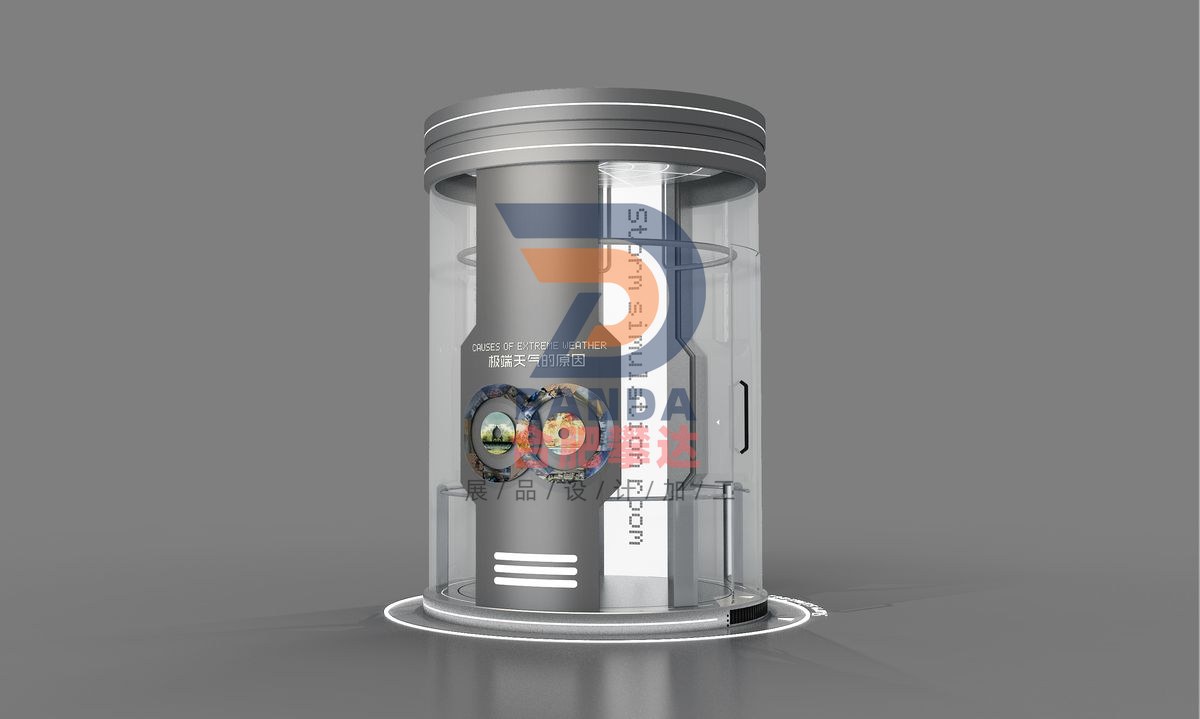
Causes of extreme weather
Earth & Planet · Interactive
- DimensionsSubject to on-site plan
- PresentationInteractive
- PricingQuoted by manufacture spec
Causes of extreme weather is a hands-on, mechanical & electromechanical interactive exhibit manufactured by Hefei Panda for science centers, children’s museums, discovery centers, STEM learning centers and family entertainment centers. Engineered for durable, robust, low-maintenance, high-traffic gallery installation, it turns abstract scientific concepts into direct, interactive visitor exploration. Hefei Panda is a global exhibit manufacturer exporting hands-on science displays to 50+ countries, with in-house engineering, fabrication, installation and commissioning.
Exhibit Summary
Causes of extreme weather is a Interactive interactive exhibit in the Earth & Planet category, designed for science centers, children’s museums, discovery centers, STEM learning centers and family entertainment centers. Built as a hands-on, mechanical & electromechanical display, it turns an abstract scientific concept into direct, interactive visitor exploration, and is engineered for durable, low-maintenance, high-traffic gallery use.
Scientific Principle
Through carousel graphic descriptions, the public can grasp the causes of extreme weather phenomena such as extreme high temperatures, extreme precipitation, extreme droughts, tropical cyclones, and compound extreme events, and improve the public's awareness of the formation of extreme weather.
Operation
Extreme weather refers to weather and climate conditions that seriously deviate from their average state, and are statistically unlikely events. The general characteristics are low probability of occurrence and high social impact. The United Nations Intergovernmental Panel on Climate Change (IPCC) report reveals that with global climate warming, the frequency of extreme weather and climate events has changed, showing an increasing trend. extreme heat The frequency and intensity of extreme high temperature events are increasing in most parts of the world. The urban heat island effect exposes cities to more and stronger threats of high temperature and heat waves. Since 1980, the number of global marine heat waves has nearly doubled. extreme low temperature Along with the frequent occurrence of extreme high temperature events, the frequency and intensity of extreme low temperature events are declining. Abnormal atmospheric circulation triggers extreme weather, such as heavy snowfall, hail, and severe cold waves. extreme precipitation For every 1°C increase in global temperature, atmospheric water vapor increases by about 7%, leading to an increase in extreme precipitation. Since 1950, extreme precipitation has revealed an increasing trend in most areas where observations are available. Sudden floods such as urban floods and flash floods are closely related to extreme precipitation. extreme drought Warming increases the evaporation potential of the atmosphere, thereby affecting the amount of clean water available in a region. Agricultural and ecological droughts have increased in many regions across all continents around the world, including East Asia, where China is located, and only a few areas have experienced relief from agricultural and ecological droughts. tropical cyclone Tropical cyclones bring three main hazards: strong winds, heavy rain and saltwater storm surges. Rising sea levels and warmer ocean temperatures due to global warming will increase the intensity and damaging effects of hurricanes. In recent years, more tropical cyclones are heading towards less frequent high latitudes, exposing more cities to the risk of storms. compound extreme events The (IPCC) 2021 report includes composite extreme events as assessment objects for the first time. Common compound extreme events can be roughly divided into four categories: early impact types, such as spring droughts that intensify summer heat waves; simultaneous occurrence types, such as extremely hot drought events; sequential occurrence types, such as sustained daytime and nighttime heat wave events; and spatial correlation types, that is, multiple events with common impact effects in space. The report reveals that compound extreme events have become more frequent in many regions around the world since 1950. The display uses two sets of mechanical wheels, with corresponding graphics and text on the two wheels. Through the interlocking form of the rotating mechanisms, the relative positions of the two mechanical wheels are accurately matched.
Export-Ready Features
- Durable, robust construction for high-traffic gallery environments
- Low-maintenance electromechanical design with reliable, safe components
- Custom sizing, theming & multilingual labeling available
- OEM & turnkey exhibit solutions with full project management
- Overseas shipping, export documentation & on-site installation supported
- Shipped to science centers and museums in 50+ countries