
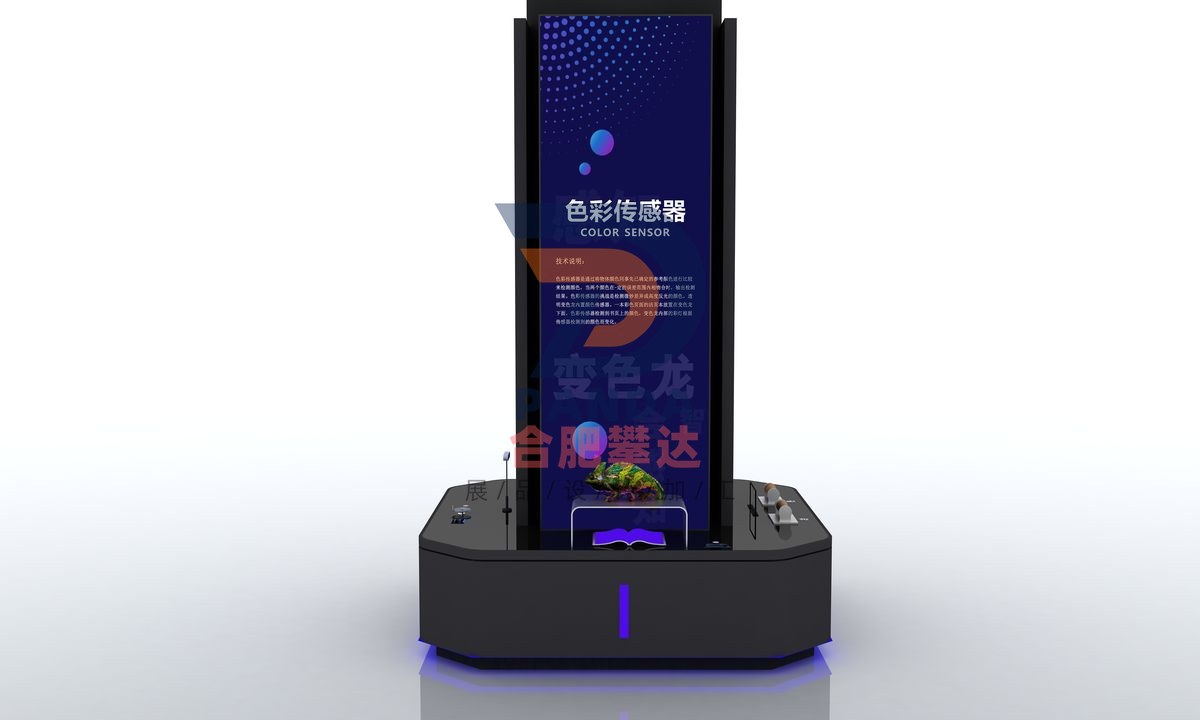
Color Sensor
Smart Technology · Interactive
- DimensionsSubject to on-site plan
- PresentationInteractive
- PricingQuoted by manufacture spec
Color Sensor is a hands-on, mechanical & electromechanical interactive exhibit manufactured by Hefei Panda for science centers, children’s museums, discovery centers, STEM learning centers and family entertainment centers. Engineered for durable, robust, low-maintenance, high-traffic gallery installation, it turns abstract scientific concepts into direct, interactive visitor exploration. Hefei Panda is a global exhibit manufacturer exporting hands-on science displays to 50+ countries, with in-house engineering, fabrication, installation and commissioning.
Exhibit Summary
Color Sensor is a Interactive interactive exhibit in the Smart Technology category, designed for science centers, children’s museums, discovery centers, STEM learning centers and family entertainment centers. Built as a hands-on, mechanical & electromechanical display, it turns an abstract scientific concept into direct, interactive visitor exploration, and is engineered for durable, low-maintenance, high-traffic gallery use.
Scientific Principle
Through the color sensor and chameleon, guests to this display will be able to perceive and identify the commonalities of colors, allowing guests to grasp the principles and uses of color sensors via analogy interactions.
Operation
The color sensor detects color by comparing the color of the object with a previously determined reference color. When the two colors match within a certain error range, the detection result is output. The challenge with color sensors is detecting subtle differences or highly reflective colors. The transparent chameleon has a built-in color sensor. A loose-leaf book with colorful pages is placed beneath the chameleon. A color sensor detects the color on the page, and the colored lights inside the chameleon change based on the color detected by the sensor. Color sensor used to identify and compare the color values (RGB) of object surfaces. This type of sensor generally uses RGB (red, green, and blue) LED light sources and calculations to detect the R, G, and B wavelength ratios in the reflected light of the object to determine whether the detected color is consistent with the setting. The color sensor detects color by comparing the color of the object with a previously determined reference color. When the two colors match within a certain error range, the detection result is output. The challenge with color sensors is detecting subtle differences or highly reflective colors.
Export-Ready Features
- Durable, robust construction for high-traffic gallery environments
- Low-maintenance electromechanical design with reliable, safe components
- Custom sizing, theming & multilingual labeling available
- OEM & turnkey exhibit solutions with full project management
- Overseas shipping, export documentation & on-site installation supported
- Shipped to science centers and museums in 50+ countries