
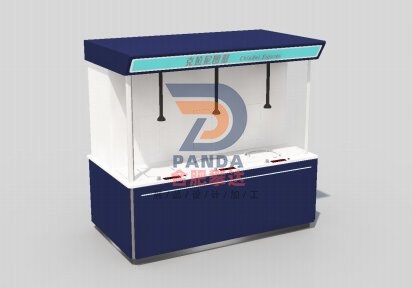
Krani Figure
Acoustics · Interactive
- Dimensions1.2×0.8×1.01m
- PresentationInteractive
- PricingQuoted by manufacture spec
Krani Figure is a hands-on, mechanical & electromechanical interactive exhibit manufactured by Hefei Panda for science centers, children’s museums, discovery centers, STEM learning centers and family entertainment centers. Engineered for durable, robust, low-maintenance, high-traffic gallery installation, it turns abstract scientific concepts into direct, interactive visitor exploration. Hefei Panda is a global exhibit manufacturer exporting hands-on science displays to 50+ countries, with in-house engineering, fabrication, installation and commissioning.
Exhibit Summary
Krani Figure is a Interactive interactive exhibit in the Acoustics category, designed for science centers, children’s museums, discovery centers, STEM learning centers and family entertainment centers. Built as a hands-on, mechanical & electromechanical display, it turns an abstract scientific concept into direct, interactive visitor exploration, and is engineered for durable, low-maintenance, high-traffic gallery use.
Scientific Principle
The displays consist of sound source vibrators, vibrating plates, sand recovery devices, automatic sand delivery devices, audio circuits, control systems, etc. How can the pattern of sand grains be deformed? The sheet vibrates in a complex way, with some parts (nodal lines) remaining stationary, thus retaining sand shaken up from nearby vibrating areas, resulting in a unique sand pattern on the sheet. This is actually the Chladny figure, also known as the "Chladny sound pattern." In the 19th century, the German physicist Ernst Chladny conducted an experiment in which he placed a wider metal sheet on a violin and sprinkled sand evenly on it. Then he started playing the violin with a bow, and as a result, the fine sand automatically arranged into different beautiful patterns. As the tunes played by the strings changed and the frequency continued to increase, the patterns continued to change and become more complex - this is the famous Krani figure.
Operation
① Press the "Start" button, and then press the "Switch" button to watch the change in the shape of the sand grains; ② When the number of sand grains decreases, press "Send Sand" to replenish sand.
Export-Ready Features
- Durable, robust construction for high-traffic gallery environments
- Low-maintenance electromechanical design with reliable, safe components
- Custom sizing, theming & multilingual labeling available
- OEM & turnkey exhibit solutions with full project management
- Overseas shipping, export documentation & on-site installation supported
- Shipped to science centers and museums in 50+ countries