
Sound Visualization
Acoustics · Interactive
- Dimensions1.2×0.8×1.05m
- PresentationInteractive
- PricingQuoted by manufacture spec
Sound Visualization is a hands-on, mechanical & electromechanical interactive exhibit manufactured by Hefei Panda for science centers, children’s museums, discovery centers, STEM learning centers and family entertainment centers. Engineered for durable, robust, low-maintenance, high-traffic gallery installation, it turns abstract scientific concepts into direct, interactive visitor exploration. Hefei Panda is a global exhibit manufacturer exporting hands-on science displays to 50+ countries, with in-house engineering, fabrication, installation and commissioning.
Exhibit Summary
Sound Visualization is a Interactive interactive exhibit in the Acoustics category, designed for science centers, children’s museums, discovery centers, STEM learning centers and family entertainment centers. Built as a hands-on, mechanical & electromechanical display, it turns an abstract scientific concept into direct, interactive visitor exploration, and is engineered for durable, low-maintenance, high-traffic gallery use.
Scientific Principle
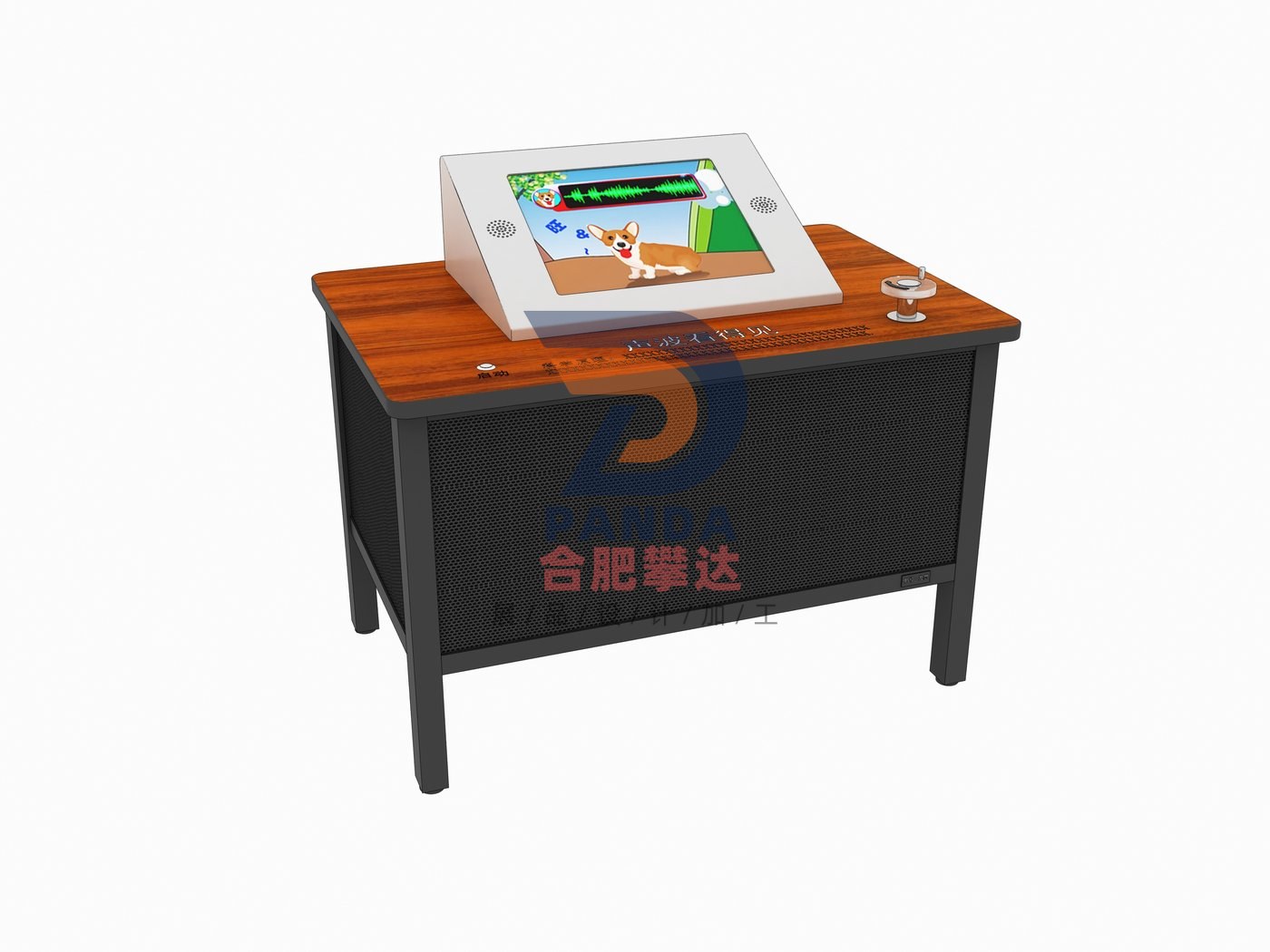
The displays consist of multimedia devices, microphones, handwheels, and collection buttons. Rotate the hand wheel to select different animals (frog, cow, tiger, dog respectively), listen to the animal's cry and watch the changes in the sound waveform on the screen. Follow the on-screen prompts, press and hold the button, imitate the animal's sound into the microphone, and compare your own sound waveform with that of the animal. You can also rotate the handwheel to select "Understanding Sound Waves" to discover about sound waves. No matter how similar you imitate, the waveform of the sound will always be different. Why is this? Sound is a wave in which loudness, pitch and timbre are recorded. The intensity of sound is called loudness, usually expressed in decibels (dB). The greater the amplitude of the sound wave, the greater the loudness. The level of sound is called pitch. The higher the frequency of the sound wave, the higher the pitch. Timbre is people's perception of the sound quality. Pure tones of a single frequency do not have timbre, but timbre refers to composite sounds. So even if you try your best to imitate animal sounds, the subtle differences in timbre are difficult to imitate. The timbre has other uses, such as knocking train wheels, boilers, ceramic vessels, etc., to judge whether there are cracks based on the timbre.
Operation
① Rotate the handwheel, select different animal icons, listen to the animal's calls and watch the changes in its waveform; ② Press the "Collect" button, imitate the animal's sound into the microphone, and compare the waveforms of your own and the animal's sound.
Export-Ready Features
- Durable, robust construction for high-traffic gallery environments
- Low-maintenance electromechanical design with reliable, safe components
- Custom sizing, theming & multilingual labeling available
- OEM & turnkey exhibit solutions with full project management
- Overseas shipping, export documentation & on-site installation supported
- Shipped to science centers and museums in 50+ countries